Picture this: You’re at a high-stakes networking event in downtown Chicago. You look around, and half the room is dressed like they’re sponsored by a mid-tier NASCAR team. Logos everywhere. Neon polyester that looks like it might actually be flammable. It’s loud. It’s distracting. It’s… well, it’s a lot.
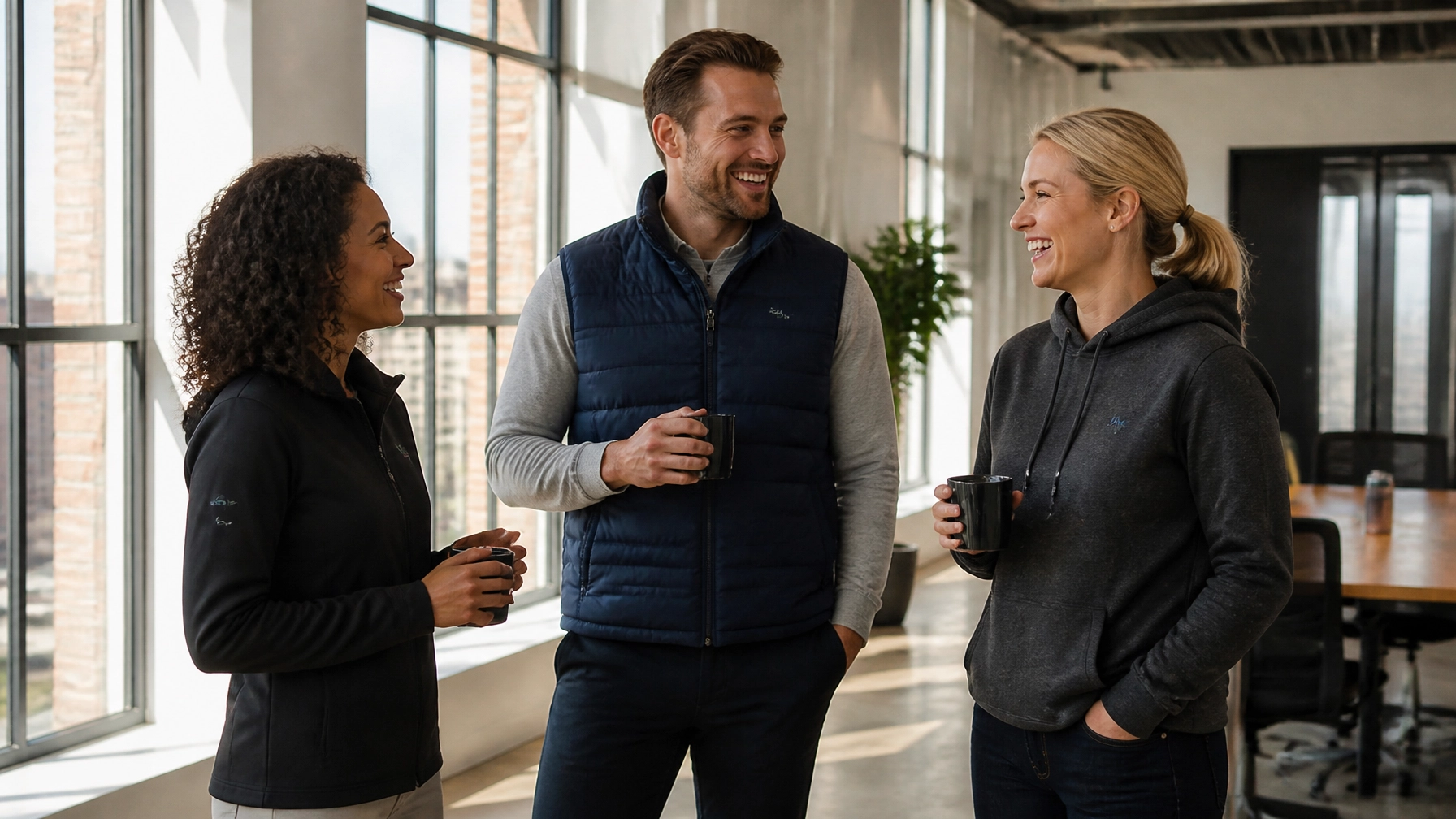
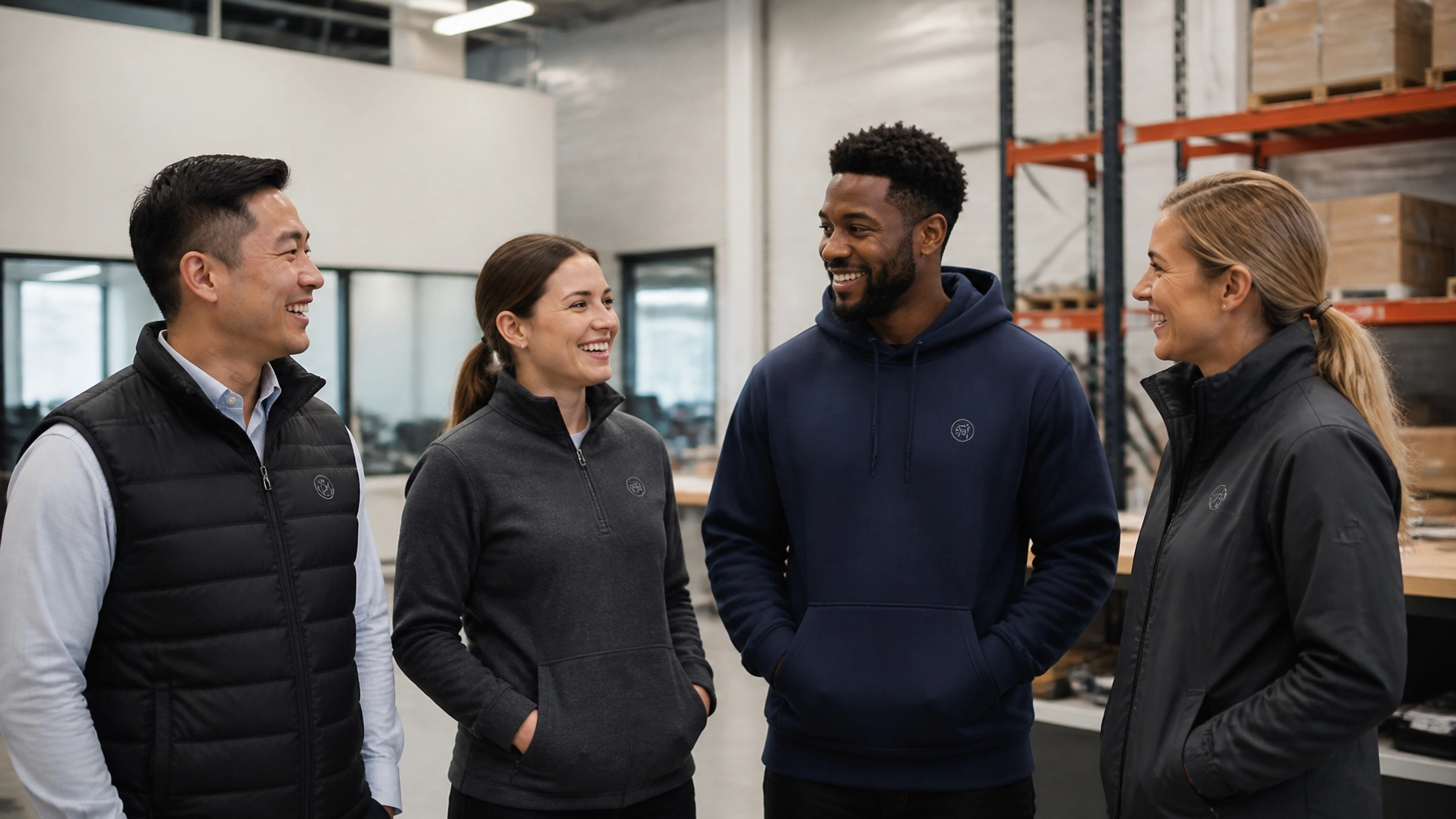
Then, you see him. The guy who looks like he just stepped off a private jet or, at the very least, out of a very expensive golf simulator. He’s wearing a crisp, perfectly tailored quarter-zip. No giant chest-plates of branding. Just a tiny, elegant logo that says, “I know exactly who I am, and I don't need to scream it at you.”
That, my friends, is Quiet Quality.
And if your marketing team is still handing out stiff, scratchy "fruit-colored" t-shirts that people only use to wash their cars (come on, we’ve all done it), it’s time for a serious intervention. We’re in 2026, people. The "Walking Billboard" era is officially in the dumpster, right next to low-rise jeans and fax machines.
The Death of the Walking Billboard
Let’s be real: nobody wants to be a human advertisement.
In the old days, corporate apparel was about one thing: Visibility. If you couldn’t see the logo from across a crowded football stadium, was it even worth doing? (Narrator: It was not.) Marketing managers used to think that the bigger the logo, the better the brand awareness.
But here’s the kicker: when you make the logo the star of the show, the person wearing it starts to feel like a prop. And when people feel like props, they don't wear the gear. It ends up in the "back of the closet" abyss, never to see the light of day again until moving day or a particularly aggressive spring cleaning.
Brand awareness isn't about volume; it's about affinity. You want your team and your clients to actually want to wear your brand. You want them to reach for that hoodie because it’s the softest thing they own, not because they’re required to wear it on Casual Friday.
Simple. Genius. Impact.
What Exactly is “Quiet Quality”?
Quiet Quality (or "Quiet Luxury" for the fashionistas among us) is the art of saying more with less. It’s the brand identity equivalent of a whisper in a room full of shouting.
It’s characterized by:
- Premium Retail Brands: Using names people already love: think TravisMathew, Nike, Peter Millar, or Brooks Brothers.
- Subtle Placement: Moving that logo to the sleeve, the back yoke, or even just a tonal hit on the hip.
- Tonal Embroidery: Using thread that is just one shade different from the fabric. It’s there, but you have to look for it. It’s a "secret handshake" for your brand.
- Superior Fabrics: We’re talking pima cotton, moisture-wicking blends that actually work, and textures that feel like a hug from a very rich relative.

Why Your Marketing Team Needs a "Retail-First" Mentality
Why should you care? Because your brand isn’t just a logo; it’s a reputation.
When you hand someone a high-quality branded workwear piece from a retail giant like Nike or TravisMathew, you aren’t just giving them a shirt. You’re giving them a "Retail Experience."
1. The "22% Happier" Rule
Did you know that employees who feel they have well-fitting, high-quality apparel are actually 22% happier at work? (Seriously, look it up. Or just ask anyone who’s ever had to wear a 100% polyester polo in a humid office.)
When your team looks good, they feel good. When they feel good, they represent your business branding with a level of confidence that a cheap t-shirt could never provide. It’s the difference between "I work here" and "I'm proud to work here."
2. The Longevity Factor
Cheap swag is like a summer fling: fun for a minute, but it doesn't survive the first wash. Premium apparel is the long-term relationship your brand deserves.
A high-quality quarter-zip stays in a wardrobe for years. It goes to the grocery store. It goes on vacation. It goes to the gym. The "cost per impression" on a TravisMathew polo might be higher upfront, but the lifespan of that garment makes it a significantly better investment for your branded merchandise program.
3. Immediate Credibility
Leveraging "Brand Halo" is a real thing. When you put your logo next to the Nike Swoosh, some of that global titan's cool-factor rubs off on you. You’re telling the world, "We associate with the best."
Who needs one more thing hugging them around tax season? (The answer is: nobody. Give them the breathable stretch fabric instead.)
The "Quiet Quality" Strategy: How to Pull It Off
So, you’re ready to ditch the neon and embrace the understated. How do you actually do it without losing your brand in the process?
Banish the "Safety Yellow" (Unless you’re on a construction site)
Lean into rich neutrals. Charcoal, navy, stone, sage, and "soft black" are the kings of 2026. These colors are timeless, they look expensive, and they don’t fight with your logo for attention.
Ditch the "Chest-Plate" Logo
Instead of a 4-inch wide logo on the left chest, try a 1.5-inch logo on the right sleeve. Or, put it on the back of the neck (the "yoke"). It feels like a designer detail rather than a corporate stamp.
Leverage Texture
Look for fabrics with a "hand-feel." Brushed finishes, ribbing, and textured knits scream quality. A textured Nike polo feels lightyears more premium than a flat, shiny one.

The ROI of Not Being Annoying

Let’s talk about the Benjamins for a second.
Marketing managers are often scared of the higher price tag that comes with retail brands. "But Greg," they say, "I can get three of the cheap shirts for the price of one TravisMathew!"
Sure. You can also get three paper plates for the price of one ceramic one, but which one are you serving Thanksgiving dinner on? (If you said paper, we need to have a different talk.)
The ROI of quality apparel isn't just about how long the shirt lasts. It’s about:
- Recruitment & Retention: High-end gear is a legitimate perk. In a competitive job market, the "swag bag" matters.
- Brand Perception: If your gear feels cheap, people assume your service is cheap. Harsh? Maybe. True? Absolutely.
- Employee Pride: When your staff wears your gear on the weekend, you’ve won. You’ve successfully moved from "work clothes" to "favorite clothes."
Stop Being a Logo, Start Being a Lifestyle
At the end of the day, your brand is a story you’re telling the world. Do you want that story to be a loud, frantic infomercial? Or do you want it to be a sophisticated, trusted narrative?
The "Quiet Quality" movement isn't just a trend; it's a shift in how we respect our employees and our customers. It’s about giving people something they actually want to keep.
So, take a look at your current apparel lineup. If it looks like it belongs in a clearance bin at a 1998 sporting goods store, it’s time for a change.
Ditch the noise. Embrace the whisper.
Ready to elevate your brand to the "Quiet Quality" standard? We’re your partner in brand management, and we know exactly where the good stuff is hidden. Let’s build an apparel program that your team will actually fight over.
Simple. Genius. Impact.