Picture this: It’s mid-December. You’ve spent three weeks chasing Dave from Accounting because he still hasn’t replied to your email about whether he’s a "Large" or an "Extra Large" in the company fleece. You’re currently staring at a color-coded spreadsheet that looks like a digital game of Tetris gone horribly wrong. Somewhere in the background, a printer is jamming, and you have exactly forty-eight hours to get the corporate apparel programs sorted before the holiday break.
Does this sound like "holiday cheer" to you? Or does it sound like a recurring nightmare that could have been avoided with a stiff drink and a better system?
Welcome to the world of holiday gifting, where the road to employee appreciation is often paved with logistical landmines and "oops, I thought you were a Medium" apologies. But here’s the kicker: it doesn’t have to be this way. In 2026, the smart money is on the size collection store.
Simple. Genius. Impact.
The Spreadsheet from Hell (And How to Banish It)
Let’s be real for a second. Traditional holiday gifting is a mess. You pick one item, usually a generic black hoodie, and hope to goodness that everyone likes black and everyone fits into the three sizes you guessed they’d need. It’s a gamble, and in the world of professional brand management, gambling is for weekend trips to Vegas, not your company's reputation.
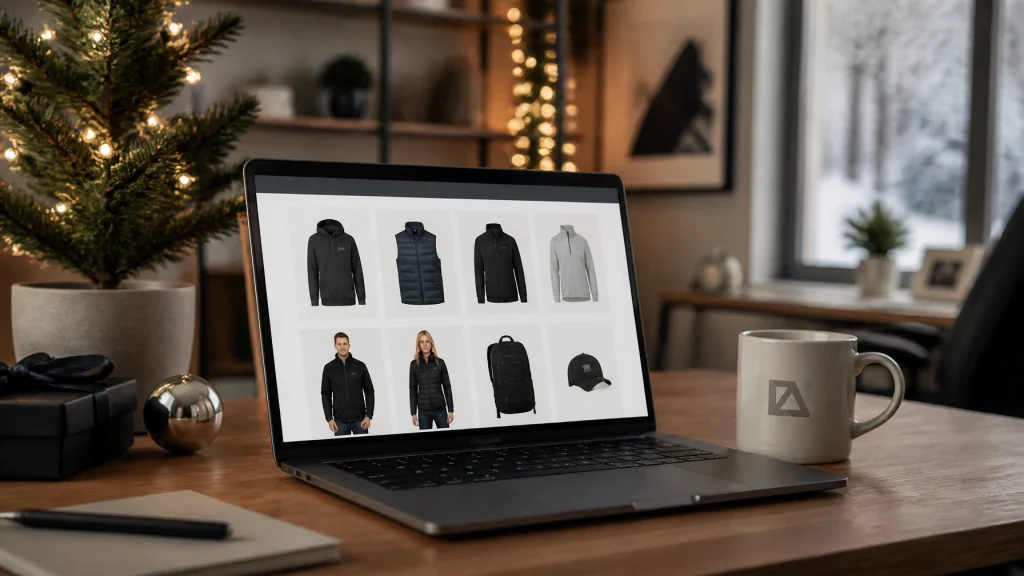
A size collection store is your escape hatch. Think of it as a temporary, high-end online boutique designed specifically for your team. Instead of you guessing their sizes, your employees log in, pick their preferred item, and, wait for it, select their own size.
(I know, groundbreaking stuff, right?)
By shifting to a choice-based model, you aren't just saving yourself from the Spreadsheet from Hell; you’re actually giving your team something they want. Nobody needs another "one-size-fits-most" beanie that makes them look like an extra in a low-budget heist movie. They want gear that fits, looks good, and feels like a genuine "thank you" rather than a checkbox on an HR list.
How a Size Collection Store Actually Works
Quick answer: a size collection store is a branded online ordering portal where employees select approved items, choose their size and color, confirm shipping details if needed, and submit their order during a set ordering window. After the store closes, the orders are consolidated, decorated, packed, and shipped.
That’s the simple version. The real magic is in the workflow.
Here’s what usually happens behind the curtain:
- Your company chooses the assortment. You pick the apparel, drinkware, tech, and gift options you want to offer.
- The store is branded to match your program. Logos, colors, messaging, eligibility rules, and deadlines get built in.
- Employees receive a store link or invitation. This can be sent by email, HR, managers, or internal communications.
- Each person shops for their own item. They review product details, check size charts, choose colors, and place their selection.
- Ordering rules keep things tidy. For example, one item per person, one apparel piece plus one accessory, or a points-based allowance.
- The store closes on a specific date. No endless trickle of late replies. No “Sorry, I just saw this” messages on a Friday at 4:52 p.m.
- Orders are processed in batches. That helps streamline decoration, reduce waste, and keep pricing under control.
- Items are kitted, packed, and shipped. This can be direct-to-home, bulk-to-office, or split by region.
In plain English? A size collection store replaces chaos with a repeatable process. It gives employees choice while giving marketers, HR teams, and operations leaders guardrails. That’s the sweet spot.
Why This Model Works Better Than Manual Size Collection
Picture this: two people both need a jacket. One wants a roomy fit for layering. The other wants a slimmer fit for commuting. If you collect only “size” on a spreadsheet, you’re missing the whole story. A store solves that because employees can compare brands, review measurements, and choose the item that best fits their preferences.
That matters because apparel fit is deeply personal. A quarter-zip from one brand may run athletic. Another may fit boxy. One fleece may be perfect for field teams. Another may work better for office staff who want something polished enough for client meetings. A good size collection store doesn’t pretend every body and every role are identical. It builds around reality.
Common Size Collection Store Formats
Not every holiday program uses the same store setup. Here are the most common formats we see:
Single-Choice Store
Each employee gets one item from a curated collection. This is ideal when you want a clean, simple holiday gifting experience with a fixed budget.
Points-Based Store
Each employee receives a point balance or dollar allowance and can “shop” within that limit. This works well when you want to offer premium and standard items in the same store without creating budget mutiny in the break room.
Size-Only Collection Store
Sometimes the item has already been selected, and the goal is simply to collect size and shipping information. This is perfect for uniforms, event apparel, or a signature holiday jacket program.
Multi-Category Holiday Store
Employees choose from several categories like apparel, drinkware, tech, bags, and comfort items. This format is excellent for larger or more diverse teams because it respects different tastes and work styles.
What the Best Stores Include
If you want strong participation and fewer support headaches, your store should include:
- Clear product photos from multiple angles
- Accurate size charts and fit notes
- Brand names employees recognize
- Mobile-friendly checkout
- Simple deadlines and ordering instructions
- Confirmation emails
- Optional home shipping fields
- Inventory visibility where applicable
- Help contact information for questions
None of this is glamorous. But neither are tire blowouts, and we still appreciate good tires. The boring details are what make the experience feel easy.
Why Employees Like It More
This part gets overlooked. A size collection store doesn’t just help the organizer. It feels better for the recipient too.
Employees like:
- choosing a style they’ll actually wear,
- selecting a size they trust,
- avoiding awkward back-and-forth emails,
- getting something that feels more personal,
- and receiving a gift that doesn’t scream “we panicked and ordered whatever was left.”
That emotional piece matters. A holiday gift should feel like appreciation, not inventory liquidation with a bow on top.
Why 2026 is the Year of the Choice-Driven Store
The landscape of company store holiday gifts has shifted. We’ve moved past the era of "swag" (stuff we all get) and into the era of "merch" (merchandise we actually wear). In 2026, your team expects more than just a logo slapped on a cheap t-shirt. They want retail-quality brands, sustainable materials, and, most importantly, the power to choose.
The "Death of the Guess"
Why are we still guessing in the age of AI and instant delivery? A size collection store eliminates the "Guessing Game" entirely. When you leverage online company stores, you’re handing the keys to the kingdom over to the people who actually have to wear the clothes.
Sustainability Isn’t a Bonus; It’s the Baseline
If your 2026 holiday program doesn’t have an eco-friendly angle, you might as well be handing out lumps of coal. (Actually, coal might be more biodegradable than some of the cheap plastic junk floating around the industry). Modern employees, especially those in the growing businesses we love to serve, care about where their gear comes from.

When choosing your collection, look for items that tell a story. Recycled fabrics, bamboo lids, organic cotton, these aren’t just buzzwords; they are a reflection of your company values.
Curating Your Collection: The Goldilocks Zone
Here is where most people trip up: they either offer two things (too boring) or two hundred things (too overwhelming). You want the "Goldilocks Zone" of curation. For most mid-sized businesses, that sweet spot is somewhere between 15 and 30 items.
The "Essential 5" Categories for 2026:
- The "Main Event" Apparel: A high-quality quarter-zip, a puffer vest, or a premium hoodie.
- The Tech-Forward Gadget: Think wireless chargers or high-end noise-canceling earbuds. (Because who doesn't want to tune out their neighbor's lawnmower during a Zoom call?)
- The Elevated Drinkware: Insulated tumblers that actually keep coffee hot for more than eleven minutes.
- The "Home Comfort" Item: A weighted blanket or a luxury candle for that hybrid work-from-home vibe.
- The Experience Add-on: A gourmet snack box or a gift card for a local coffee shop.
By offering a mix, you ensure that even the person who "doesn't need another shirt" finds something they’ll actually use. This is the secret sauce of corporate apparel programs, it’s about the perceived value, not just the price tag.
Bonus Categories Worth Adding to Your Holiday Store
Now, let’s widen the lens a bit. The “Essential 5” gives you a strong foundation, but if you want a holiday program that feels modern, inclusive, and just plain smarter, add a few more categories to the mix.
6. The Everyday Bag
A quality backpack, tote, or laptop sleeve punches above its weight. Bags travel. They commute. They show up in airports, coffee shops, trade shows, and school pickup lines. In other words, they quietly do brand impressions while your logo minds its own business.
7. The Desk Upgrade
Think premium notebooks, wireless mouse pads, monitor risers, planners, or classy pen sets. These items work especially well for banking teams, administrative staff, and professionals who spend most of their day in front of a screen.
8. The Wellness Pick
Recovery kits, yoga mats, massage guns, insulated food containers, or fitness accessories can be a hit when your culture emphasizes wellbeing. This category says, “We value you as a person,” which lands a lot better than another random stress ball.
9. The Travel Essential
Luggage tags, packing cubes, toiletry kits, travel mugs, and compact tech organizers are fantastic for field teams, sales reps, and executives who live somewhere between a conference room and Gate B12.
10. The Family-Friendly Option
This one is sneaky-good. Cozy blankets, games, snack kits, or seasonal food gifts let employees choose something they can enjoy at home with family. That broadens the emotional appeal of your holiday gifting program.
11. The Seasonal Outerwear Upgrade
If your workforce is spread across colder regions, outerwear deserves its own category separate from basic apparel. Soft-shell jackets, insulated vests, rain shells, and packable puffers often feel more premium than a sweatshirt and are more likely to become daily wear.
12. The Eco-Conscious Choice
Reusable lunch kits, recycled tote bags, FSC-certified notebooks, or products made from ocean-bound plastic can resonate with employees who care about sustainability. It’s not about being performative. It’s about giving people options that align with their values.
How Many Categories Should You Offer?
Quick answer: usually five to eight categories is plenty, even if you have 15 to 30 total SKUs.
Why? Because categories help people browse faster. Instead of scrolling through a digital junk drawer of random merchandise, employees can zero in on what matters to them: apparel, tech, drinkware, travel, comfort, wellness, and so on.
That structure also helps you as the organizer. You can balance budgets more strategically, offer a mix of price points, and make sure the collection doesn’t accidentally become “six fleece pullovers and one lonely mug.”
A Simple Merch Mix That Usually Works
If you want a practical formula, try this:
- 40-50% apparel
- 15-20% drinkware
- 10-15% tech
- 10-15% bags or travel
- 10-15% comfort, wellness, or food gifts
That mix works because apparel tends to drive excitement, while accessories round out the selection for people who already have enough hoodies to survive a minor apocalypse.
Curate for Roles, Not Just Tastes
Here’s another pro tip: build your holiday collection around how people actually work.
Ask yourself:
- Are they in-office, remote, or hybrid?
- Do they travel?
- Do they meet with customers?
- Are they in warehouses, branches, campuses, or corporate offices?
- Do they need polished gear, cozy gear, or practical gear?
A banking team may lean toward polished quarter-zips, professional totes, and premium notebooks. A growing tech company may prefer hoodies, drinkware, and wireless accessories. A field team may love durable outerwear, backpacks, and travel-ready gear. The best online company stores don’t just offer more stuff. They offer the right stuff.
The Hidden Superpower of Better Curation
A well-curated store reduces indecision. That means more completed orders, fewer support emails, and a stronger overall experience.
Too few choices feels stingy.
Too many choices feels exhausting.
The right choices feel thoughtful.
That’s the Goldilocks Zone. Still undefeated.

The Logistics: Where the Magic (or the Mess) Happens
Okay, let’s talk shop. You can have the most beautiful online store in the world, but if the boxes arrive looking like they were kicked across the country by an angry toddler, your brand takes a hit. This is where kitting and fulfillment come into play.
At Proforma Awards Print & Promotions, we don't just set up the store and walk away. We act as an extension of your team. That means we handle the "nitty-gritty" that keeps you up at night.
What a "Total Solution" Looks Like:
- Custom Packaging: The unboxing experience matters. Imagine your team opening a box that features your brand colors, festive tissue paper, and a personalized note. It’s the difference between a "gift" and a "shipment."
- Kitting: Want to combine a hoodie, a tumbler, and a bag of premium coffee into one seamless package? That’s kitting. It’s an art form, really. (Okay, maybe not an art form, but it definitely requires more skill than most people think).
- Global Distribution: Whether your team is in Chicago or working remotely from a beach in Portugal, we make sure the gear gets there on time.
You can dive deeper into our kitting & fulfillment services here. It’s basically like having a Santa’s Workshop that actually follows OSHA guidelines and answers your emails.

How to Choose Your Size Collection Store Partner
Not all store platforms are created equal. Some are clunky, some look like they were designed in 1998, and some are so complicated you need a PhD in computer science just to change a logo. When you’re vetting a partner for your 2026 holiday program, ask these three questions:
1. Is it Mobile-Friendly?
Your employees are going to browse this store on their phones while they’re waiting for their latte or sitting on the train. If the site doesn't work on mobile, your redemption rates will tank. Simple as that.
A mobile-friendly store is more than “technically visible on a phone.” It should:
- load quickly on cellular data,
- display product photos clearly,
- make size charts easy to read without pinch-zoom gymnastics,
- keep buttons large enough to tap,
- and offer a checkout flow that doesn’t feel like filing taxes in a broom closet.
Why does this matter so much? Because store participation often happens in stolen moments. A lunch break. A commute. Five minutes before a meeting. If your holiday store creates friction on mobile, employees will tell themselves they’ll “do it later.” And later, as we all know, is where abandoned tasks go to die.
Mobile-Friendly Store Checklist
A strong mobile company store should include:
- responsive design,
- simple navigation,
- compressed but high-quality images,
- readable fonts,
- minimal required clicks,
- autofill-friendly forms,
- and obvious deadlines or call-to-action buttons.
If you want better engagement, banish clutter. Ditch the digital maze. Make it easy enough that even the person with 47 open browser tabs and a cold coffee can finish ordering in two minutes flat.
2. Can it Handle Real-Time Inventory?
There is nothing, and I mean nothing, more frustrating than picking out a cool navy jacket only to get an email three days later saying, "Oops, we're out of navy, hope you like neon orange!" Your partner should have a system that tracks inventory in real-time.
And not fake-real-time. Real real-time.
That means the store should reflect current availability as accurately as possible, especially when you’re working with popular apparel brands, seasonal products, or limited stock colors and sizes. If inventory changes quickly, your partner should have a process for monitoring substitutions, communicating risk, and recommending alternates before the whole thing catches fire.
Why Real-Time Inventory Matters
Real-time inventory helps you:
- avoid overselling,
- reduce disappointing substitutions,
- protect delivery timelines,
- improve employee trust,
- and keep budgets from getting derailed by last-minute product swaps.
This is especially important for holiday programs. Q4 inventory can move like concert tickets. One minute your preferred black medium fleece is available. The next minute it has vanished into the retail void, never to be seen again until February.
What to Ask a Store Partner About Inventory
Ask practical questions like:
- How often is inventory updated?
- Do you monitor size and color availability before launch?
- What happens if an item runs out after the store opens?
- Can you swap in approved alternates quickly?
- Will employees see out-of-stock items, or are those hidden automatically?
- Do you reserve inventory at order time or after the store closes?
These questions separate real operators from the folks who just built a pretty storefront and called it a day.
3. Do They Actually Know Apparel?
Apparel is tricky. A "Large" in one brand is a "Small" in another. Your partner should be able to provide detailed size charts and, ideally, advice on which brands run "true to size." We’ve been doing this for a long time, we know who makes the shirts that shrink and who makes the ones that last.
This matters more than people think. A beautiful store with bad apparel guidance is like a sports car with square wheels. Looks nice. Goes nowhere.
A good partner should help with:
- brand recommendations,
- fit consistency across styles,
- decoration placement,
- fabric selection,
- layering considerations,
- and product durability.
They should also know when not to recommend something. For example, maybe that trendy fashion-fit item looks great on a model but creates sizing headaches for a broad employee population. Maybe that bargain fleece pills after two washes and turns your thoughtful holiday gift into a sad little lint magnet. A trustworthy partner tells you the truth, even when the truth is less glamorous.
4. Can They Support the Full Program, Not Just the Website?
This one is huge. Some vendors can build a store but leave the rest to you. That’s like handing you a steering wheel and calling it a car.
Ask whether your partner also handles:
- sourcing,
- decoration,
- project management,
- kitting,
- fulfillment,
- split shipments,
- returns or issue resolution,
- and reporting.
The more connected the process is, the fewer surprises you get. And in holiday gifting, surprises should come wrapped, not buried in a shipping exception report.
5. Will They Help You Curate Strategically?
A strong partner should guide assortment planning based on budget, audience, climate, and goals. If their idea of strategy is “here are 300 products, good luck,” run.
You want someone who can say:
- “This brand runs small, let’s avoid it for a broad workforce.”
- “This outerwear category is strong for your field team.”
- “This price point gives employees better perceived value.”
- “This item is high-risk in Q4 inventory, let’s build a backup.”
That kind of advice saves time, reduces regret, and makes you look far more organized than you may feel on the inside.
6. Can They Provide Reporting and Clean Data?
At the end of the program, you should be able to see what happened. Orders placed. Top categories. Participation rate. Shipping status. Inventory issues. Budget usage.
Clean reporting matters because it helps you improve the next store. It also helps you answer the classic leadership question: “So… how did it go?” without opening twelve spreadsheets and whispering for strength.
7. Do They Feel Like an Extension of Your Team?
This is the big one. You want a partner who communicates clearly, flags issues early, and solves problems before they become your emergency. You want people who answer emails, think ahead, and understand that your brand is on the line.
That’s the difference between a vendor and a true brand management partner.
If you want a practical place to start, look for a team that can connect your holiday store to broader online company stores, printing services, branded packaging, and kitting & fulfillment. When one partner can support the full ecosystem, everything gets smoother. Less juggling. Fewer dropped balls. Better outcomes.
The ROI of "Doing it Right"
You might be thinking, "Greg, this sounds like a lot of work." And you're right, it is a lot of work. But it’s our work, not yours. When you partner with us at Proforma Awards, you’re buying back your time.
Think about the cost of:
- Correcting wrong sizes.
- Handling returns.
- The negative "vibe" of a disappointed employee.
- The hours you spend managing the project.
When you factor all that in, a professional size collection store isn’t just a "nice-to-have", it’s a financial no-brainer. It boosts morale, streamlines your budget, and makes you look like a marketing genius. (And who doesn't want to look like a genius before the performance reviews hit?)
The Practical ROI, Broken Down
Let’s make this more concrete. A well-run size collection store improves return on investment in at least five ways:
1. Fewer Ordering Errors
When employees choose their own size and item, you reduce manual entry mistakes and bad assumptions. That means fewer reorders, fewer exchanges, and less waste.
2. Better Budget Control
A curated store with rules, allowances, and approved products keeps spending from wandering off into the woods. You know the item mix, the decoration plan, the fulfillment approach, and the cost structure up front.
3. Higher Perceived Value
A $60 item someone picks themselves often feels more valuable than an $80 item chosen for them. Choice changes the emotional math.
4. Stronger Participation
People are more likely to engage with a holiday gifting program when the options feel relevant. Better engagement means your investment actually gets seen, worn, and appreciated.
5. Less Internal Labor
This one is the silent budget killer. Every hour your HR, marketing, or operations team spends chasing sizes, correcting addresses, or fielding “do you have this in blue?” emails is real labor cost. A streamlined store cuts that overhead dramatically.
AEO-Friendly Answer: Is a Size Collection Store Worth It?
Yes. A size collection store is worth it for most 2026 holiday programs because it reduces apparel sizing errors, improves employee satisfaction, supports better budget control, and simplifies fulfillment. It is especially valuable for companies with remote teams, multiple offices, or a broad range of employee preferences.
That’s the short answer. The longer answer is that it protects your time, your brand, and your sanity all at once. Which, frankly, is doing the Lord’s work.

Timeline: When Should You Start?
If you’re reading this and it’s already November… well, godspeed. But if you’re planning for 2026, the best time to start is now.
- Q3 (July – September): This is the time to select your items and finalize your corporate apparel programs. This is also when you want to lock in your fulfillment dates.
- Early Q4 (October): Launch your store! Give your employees 2-3 weeks to make their selections. This gives you plenty of time to handle the "I forgot my password" emails.
- November: We handle the kitting, the packing, and the shipping.
- December: You sit back, sip some eggnog, and watch the "thank you" emails roll in.
Simple? Yes. Genius? Absolutely.
A Smarter Planning Buffer for 2026 Holiday Stores
If you want less drama and better product availability, start even earlier than you think you need to. The best holiday stores often begin planning in late Q2 or early Q3, especially if you want:
- premium retail brands,
- custom packaging,
- multiple shipping destinations,
- embroidered outerwear,
- or a wider range of sizes and colors.
Holiday calendars have a funny way of sneaking up like a raccoon in a trash can. One minute it’s August. The next minute everyone wants decorated jackets delivered before Thanksgiving.
Practical Launch Tips
To keep your size collection store running smoothly:
Set a Clear Ordering Window
Ten to fourteen days is often enough. Too short and people miss it. Too long and they procrastinate like it’s an Olympic event.
Send More Than One Reminder
Use a launch email, a midpoint reminder, and a final 48-hour notice. People are busy. Reminders are not nagging; they are logistics with better PR.
Keep Store Rules Simple
If your employees need a decoder ring to understand what they can order, the setup is too complicated. One item, one allowance, one deadline. Clean wins.
Build in a Backup Plan
Have alternates approved for top items, especially outerwear and popular sizes. This is your parachute if Q4 inventory gets weird.
Confirm Shipping Strategy Early
Decide whether orders are shipping to homes, offices, branches, or a mix. Address collection and timing matter more than most people realize.
These are the details that turn a good holiday program into a smooth one. And smooth is underrated. Smooth is beautiful. Smooth is how you avoid those “quick question” emails multiplying like gremlins after midnight.
Final Thoughts: Don't Be the Spreadsheet Person
Don't let 2026 be the year you're buried under a mountain of mismatched t-shirts and angry Slack messages. Embrace the magic of the size collection store. It’s about making complex tasks easy: which, coincidentally, is exactly what we do best.
Ready to stop guessing and start gifting like a pro? Whether you’re looking for high-end Nike gear or sustainable office supplies, we’ve got your back. Let’s make this holiday season the one where you actually get to enjoy the party.
Get in touch with us today and let’s start building your 2026 holiday store. Your future (and much less stressed) self will thank you.