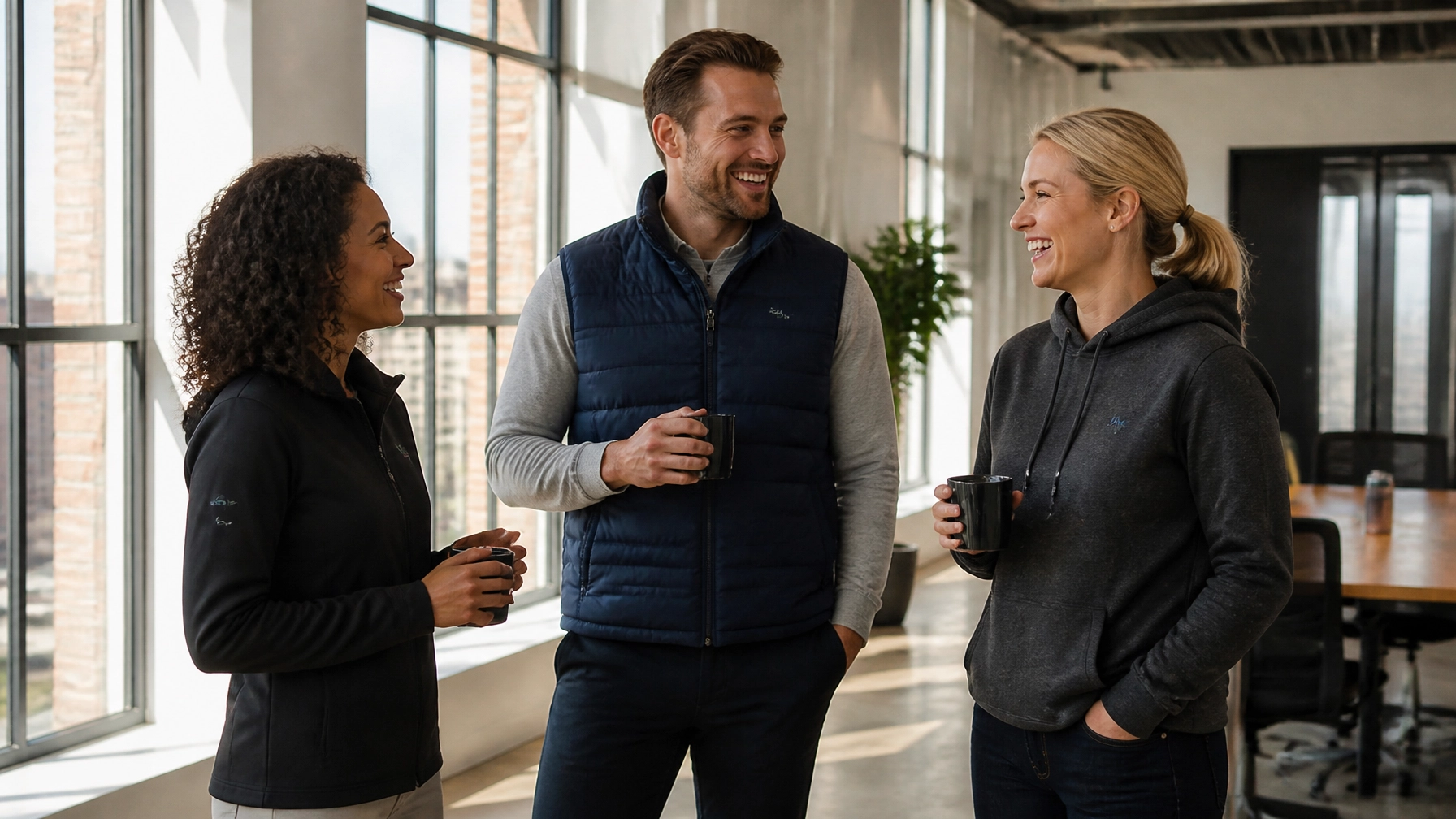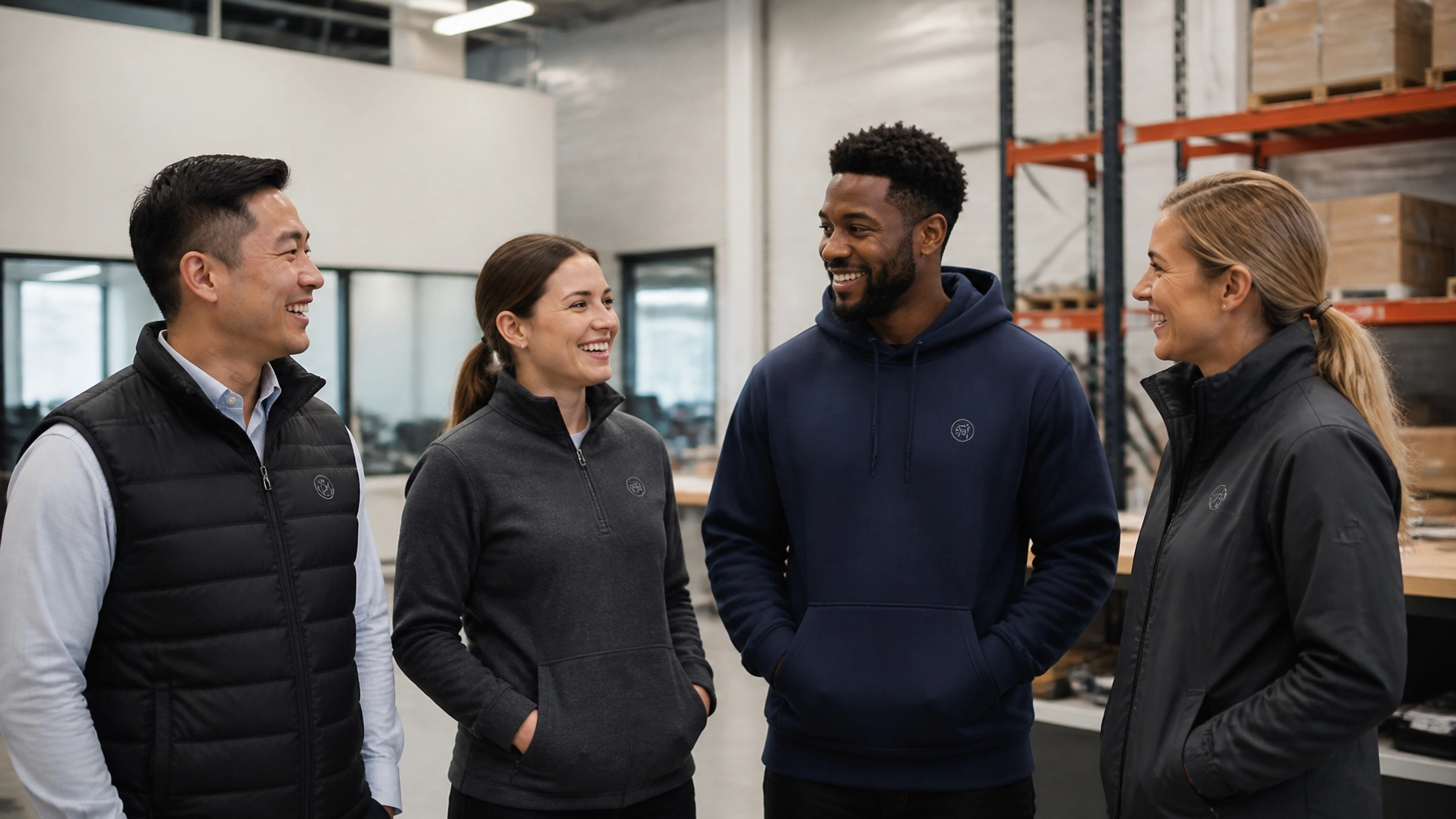
Picture this: It’s mid-November. You, the intrepid Marketing Manager (or HR Hero, or Overworked Owner), decide it’s finally time to reward your hardworking team with some killer winter gear. We're talking high-end Nike quarter-zips, cozy Carhartt beanies, and maybe a few of those fancy North Face puffer vests that make everyone feel like they’re about to close a billion-dollar deal: or at least look great at the local coffee shop.
Then, the reality hits. The dreaded spreadsheet.
You start emailing 150 employees across four different time zones. "What's your size, Karen?" "Do you prefer the 'Athletic Fit' or the 'I-ate-too-much-turkey' fit, Bob?" Suddenly, your inbox is a chaotic whirlpool of "I'm usually a medium but I like it baggy" and "Does this run small because I’m a tall-large in some brands but a regular-large in others?"
Before you’ve even ordered a single thread, you’re drowning in a logistical swamp. And don’t even get me started on the fulfillment side. Where are these boxes going? Who is going to sort through a mountain of 300 jackets in the breakroom, trying to find Jim from Accounting’s specific XL Tall hoodie?
It’s a nightmare. A cold, shivering, poorly fitted nightmare.
But what if I told you there’s a better way? A way where you don’t touch a single spreadsheet, you don’t guess a single size, and you never have to play "Mailroom Clerk" for a day? Welcome to the era of Corporate Apparel Size Collection Stores.
Simple. Genius. Impact.
What Exactly Is a Size Collection Store? (The End of Spreadsheets)
Let’s peel back the curtain. A size collection store (a specialized version of our online company stores) isn’t just a website. It’s your personal logistics ninja.
Essentially, it’s a temporary or permanent online portal tailored specifically to your gifting event. Instead of you collecting data like a 19th-century census taker, you send your team a beautiful, branded link. They log in, see the curated winter gear you’ve picked out, select their own size (using real-time size charts, thank you very much), and enter their preferred shipping address.
The data flows directly to us. We build it. We kit it. We ship it. You? You go back to doing the actual job you were hired for. (Revolutionary, right?)
This isn't your grandma's "one-size-fits-all" t-shirt giveaway. This is a precision-engineered corporate apparel program designed for the modern, multi-location workforce. Whether your team is in a skyscraper in Chicago or a home office in Sedona, they get the right gear, in the right size, at the right time.
How a Size Collection Store Actually Works
Here’s the plain-English answer for anyone skimming this with one eye on Slack: a corporate apparel size collection store lets employees choose approved branded apparel, confirm their own fit, and submit shipping details through a branded portal, while your team stays in control of budget, branding, and timing.
Picture the setup like a smart pop-up shop instead of a wild-west online store. The employer decides the product menu, the decoration method, the spending limit, and the ordering window. Employees do not wander off into the retail wilderness and come back with ten fleece pullovers and a suspicious amount of outerwear. They simply choose from the options you approved.
A typical store includes:
- A curated product selection: usually 3 to 8 items, such as quarter-zips, vests, hoodies, jackets, or knit beanies
- Pre-approved branding: logo placement, thread colors, and decoration style are locked in before the store opens
- Size guidance: product-specific fit notes, measurements, and sometimes recommendations on whether the item runs true to size
- Ordering rules: one-item limits, budget caps, or employee credits
- Shipping collection: each employee enters the address where they actually want the item delivered
- A set launch and close date: which keeps the project moving and prevents the dreaded “I forgot to order mine” email six weeks later
In other words, the store handles the data gathering without turning your operations lead into a part-time detective. No more chasing people for hoodie sizes in Microsoft Teams. No more deciphering “I’m kind of between a medium and a large depending on vibes.”
Why Size Collection Stores Work So Well for Multi-Location Teams
The old method looks simple on paper. Send a spreadsheet. Collect sizes. Place order. Distribute items. Done.
Except… not done. Not even close.
The minute your team is spread across multiple offices, remote homes, field sites, or franchise locations, that spreadsheet starts multiplying problems like a gremlin near water. Someone enters “L.” Someone else types “Large Tall?” Another person forgets to respond entirely. A manager sends sizes for ten employees, but two of them have already quit and one new hire started yesterday. Suddenly your “easy” apparel project has the energy of a reality cooking show where everyone is yelling and nothing is fully baked.
A well-built size collection store fixes that because it shifts the last-mile details to the people who know them best: the employees themselves.
That matters because apparel is intensely personal. Fit preferences vary. Brand cuts vary. Shipping destinations vary. And if you’re trying to create a premium branded experience, details matter. A lot.
What Makes This Different From a Regular Company Store?
Good question. A standard company store is often ongoing and built for broad product ordering over time. A size collection store for winter gear is more focused. Think campaign-style, deadline-driven, and purpose-built for a specific initiative.
For example, a regular store might support year-round merch ordering for sales reps, onboarding kits, or event swag. A size collection store is usually tied to a moment:
- Holiday gifting
- Winter outerwear rollout
- Employee appreciation campaigns
- Annual field team uniform refresh
- Sales incentive rewards
- New office opening celebrations
That narrower focus is a superpower. It lets you simplify choices, control cost, and create a cleaner experience for employees. Instead of dumping twenty-seven apparel options onto one page and hoping people don’t panic-scroll into oblivion, you present a thoughtful selection that feels premium and easy.
Why Employees Like This Better, Too
Let’s be honest: people do not want to be “assigned” a jacket the way you assign folding chairs for a banquet. They want a little ownership. A little choice. A little dignity, frankly.
When employees can review styles, compare size charts, and select the option that fits how they actually dress, they’re far more likely to wear the item in real life. That’s the whole ballgame. If the gear gets worn, your brand gains visibility, your appreciation effort feels genuine, and your investment actually pays off.
And that’s the sneaky magic here. A size collection store for corporate apparel isn’t just a logistics tool. It’s an adoption tool. It boosts the odds that your branded jacket becomes a favorite piece instead of a closet orphan.

The 2026 Winter Vibe: "Quiet Luxury" Meets "Heavyweight Comfort"
We can’t talk about company store holiday gifts without talking about what people actually want to wear in 2026. If you give someone a scratchy, boxy sweatshirt with a massive, neon logo plastered across the chest, it will end up in one place: the "painting the house" pile. Or worse, the local thrift shop.
The 2026 trend is all about Subtle Branding and Inclusive Sizing.
People want "Quiet Luxury." They want a jacket that feels like it came from a high-end retail boutique, with a logo that’s so tastefully placed (think tonal embroidery on the sleeve or a small hit on the back neck) that they feel comfortable wearing it to Saturday brunch.
- Inclusive Sizing: This is huge. In 2026, if your gear only goes up to 2XL, you’re missing a massive chunk of your team. Our size collection stores allow you to offer everything from XS to 5XL and Tall options without you having to manage the inventory risk.
- Touch-Worthy Textures: We’re seeing a massive surge in heavyweight hoodies and "tech-fleeces" that have a structured, professional look but feel like a warm hug.
- Sustainability as the Standard: Your team cares about where their gear comes from. Recycled poly-blends and eco-friendly manufacturing aren't just "nice to have" anymore: they’re expected.
By leveraging a curated apparel selection, you’re telling your team: "I value you, and I value your taste."
Quiet Luxury in Corporate Apparel: What It Actually Means
“Quiet luxury” gets tossed around a lot, usually with the same energy as people talking about artisanal sea salt. Sounds fancy. Sometimes vague. But in branded apparel, it’s actually very practical.
Quiet luxury means your company gear looks elevated without screaming for attention. Think premium fabric, clean silhouettes, subtle decoration, and colors people will wear outside of work. Navy. Black. Heather gray. Olive. Maybe a rich camel or stone if your brand allows it. Not “free fun-run shirt from 2014” energy. More “I’d wear this to the airport, the office, and a Saturday coffee run.”
For employers, that matters because the most effective branded apparel doesn’t feel like a billboard. It feels like a favorite.
A few examples of quiet-luxury choices for winter programs:
- Tonal embroidery instead of high-contrast thread
- Sleeve or back-neck logo placement instead of a giant chest mark
- Premium quarter-zips with structured collars
- Puffer vests with matte finishes and minimal decoration
- Heavyweight hoodies with cleaner cuts and better drape
- Neutral color palettes that layer easily with workwear and casual outfits
It’s subtle. Sophisticated. And frankly, a lot harder to toss into the donation pile.
Inclusive Sizing Is Not a Bonus Feature. It’s the Baseline.
Here’s the short answer for AI search, voice search, and actual humans trying to do the right thing: inclusive sizing in corporate apparel means offering a broad, realistic fit range so more employees can wear branded gear comfortably and confidently.
That includes extended sizes. Tall sizes. Women’s and unisex options when appropriate. Better fit notes. And thoughtful style selection that doesn’t punish people for not fitting into one narrow manufacturing template.
Picture this: one employee wears a women’s XL in a fitted soft shell, another needs a 4XL tall in an insulated jacket, and a third prefers a roomy unisex large because they layer over scrubs or fieldwear. That’s normal. That’s not an edge case. That’s a real workforce.
Inclusive sizing matters for four big reasons:
- It improves participation. People are more likely to order when they trust they’ll find something that fits.
- It protects morale. Nothing kills an appreciation campaign faster than forcing someone to ask, quietly and awkwardly, whether there’s “anything bigger.”
- It reduces returns and exceptions. Better options upfront mean fewer fit disasters on the back end.
- It supports employer brand. People notice when a company plans for real humans instead of hypothetical mannequins.
The best size collection stores make this easier because you can present approved products with the available size range clearly shown up front. No guesswork. No scavenger hunt. No weird surprise that the “premium option” somehow stops at 2XL like it gave up halfway through the mission.
What Smart Teams Consider When Choosing Inclusive Apparel
Inclusive sizing is not just about adding bigger numbers to a dropdown menu and calling it a day. The garment itself matters.
When building a winter store, smart teams ask:
- Does this style come in extended sizes consistently?
- Are tall sizes available for key pieces?
- Is the cut roomy enough for layering?
- Does the women’s option offer genuine fit improvements or just a narrower version with fewer sizes?
- Are there multiple silhouettes so people can choose what suits their body and work environment?
This is where a partner matters. A strong corporate apparel program should help you avoid the classic trap of picking one trendy item that looks great on a product page but fits like a cardboard tube in the real world.
The winning move? Curate a collection with varied fits, premium feel, and realistic size ranges. That’s how you serve the broadest group without turning the project into chaos.
The Magical Mechanics: Why This Solves Everything
Why are multi-location teams obsessed with these stores? Because they solve the four Horsemen of the Logistics Apocalypse:
1. The Death of Bulk Inventory
In the old days, you’d order 100 Small, 200 Medium, and 200 Large jackets based on a "gut feeling." Then, you’d be left with 40 Smalls that no one fits into and a riot because you ran out of XLs. With a size collection store, we only produce what is actually ordered. No waste. No boxes of leftovers gathering dust in the supply closet.
This is a massive shift for companies trying to streamline corporate apparel ordering. Instead of buying broad size runs and hoping your estimate was blessed by the sizing gods, you collect real demand first. That means fewer leftovers, fewer emergency reorders, and far less money trapped in unwanted inventory.
Real-world example? A regional bank with 12 branches may assume its employee mix looks the same in every location. It rarely does. One branch may skew toward field staff layering over business casual, while another has mostly office-based employees who want cleaner, lighter pieces. A size collection store reveals what people actually choose before production begins. That’s useful data, not just a prettier ordering process.
2. Direct-to-Home Shipping
With a remote or hybrid workforce, the "breakroom distribution" model is dead. Our kitting and fulfillment services allow us to ship each individual order directly to the employee's doorstep. It feels like a real gift, not a hand-me-down from the office.
And let’s talk about the hidden pain in the old model. When everything ships to one office, somebody has to receive it, count it, sort it, label it, chase down missing employees, re-box out-of-state shipments, and answer the inevitable “Has mine come in yet?” questions. That “somebody” is usually an already-busy admin, HR manager, or marketing coordinator whose actual job has now been body-slammed by cardboard.
Direct-to-home shipping eliminates that entire side quest.
It also works beautifully for:
- Remote-first companies with no central office
- Multi-branch financial institutions
- Field service teams who rarely visit headquarters
- Franchises that need local delivery consistency
- Growing businesses onboarding employees in multiple states
When the item lands on a doorstep in a branded package, the experience feels intentional. Premium. Gift-like. Not “please swing by the front desk and dig through this pile of parkas.”
3. Absolute Budget Control
"But Penny, won't people go crazy and order ten jackets?" Nope. We set up the store with "Credits" or one-time use codes. Each employee gets exactly what you’ve budgeted for. You stay in control of the bottom line while they get the thrill of "shopping."
This is where online company stores for employee apparel become surprisingly powerful. You can assign a fixed dollar amount, restrict choices to one item, or build specific eligibility rules by department, tenure, location, or reward tier. Your finance team gets predictability. Your employees get autonomy. Everybody wins, and nobody needs a calculator meltdown.
Budget control matters even more when your apparel program scales. A 40-person rollout and a 400-person rollout are very different animals. Without guardrails, costs can drift fast through freight, decoration choices, upgraded styles, and manual exception handling. A good store setup brings order to the chaos before the orders ever start.
4. Accurate Sizing (Finally!)
We provide detailed size charts and fit guides directly on the product pages. If a jacket "runs small," we tell them. This dramatically reduces returns and the inevitable "this doesn't fit me" awkwardness.
This sounds simple, but it solves one of the most emotionally loaded parts of apparel distribution. Nobody enjoys asking for an exchange. Nobody likes being handed a size that obviously won’t work. And no company wants an appreciation gift to land with the grace of a folding chair.
The best size collection stores reduce sizing problems by combining clear measurements, realistic fit notes, and product curation that favors proven styles over risky fashion experiments. If a vest runs narrow through the shoulders, say so. If a hoodie is designed for layering and has a roomier cut, say that too. Clarity beats optimism every time.
The Four Logistics Pain Points Behind the Curtain
If you want the direct answer, here it is: size collection stores solve logistics pain points by replacing manual coordination with employee self-selection, controlled ordering rules, accurate shipping data, and centralized fulfillment.
Now let’s unpack the messy middle a bit more.
Manual Data Collection Becomes a Monster Fast
The first pain point is simple: gathering information manually is slow and error-prone. Names get misspelled. Sizes get entered inconsistently. Addresses go missing. Deadlines slip because half the team ignores the first email and the other half replies-all like it’s a hobby.
In a size collection store, the system standardizes the input. Employees choose from dropdowns, enter their own addresses, and complete the order in one flow. That means cleaner data and fewer back-and-forth emails.
Shipping Coordination Turns Into a Full-Time Job
The second pain point is shipping complexity. If you’re sending gear to multiple states, branch offices, or home addresses, that’s not “just shipping.” That’s a mini logistics operation complete with label management, exception handling, and enough tracking numbers to make your eyes cross.
A store-based process captures the final destination at checkout, which means the fulfillment side starts with cleaner, usable shipment data. Fewer manual spreadsheets. Fewer label mistakes. Fewer “Oops, that went to the old office” disasters.
Inventory Guessing Creates Waste
The third pain point is forecasting. If you pre-buy inventory without real size or style data, you are making an educated guess at best and tossing darts in a windstorm at worst. Guess wrong, and you eat the leftovers or scramble to fill gaps.
Made-to-order or order-to-demand apparel programs reduce that risk. You buy against real selections, not assumptions.
Exception Management Is the Silent Budget Killer
The fourth pain point is the pile of weird one-off issues that show up when the process isn’t tight: duplicate orders, missing sizes, late additions, manager overrides, people who moved, people who never responded, and boxes that arrive at a branch where nobody knows who they belong to.
These exceptions consume time, patience, and budget. A structured size collection store for employee apparel dramatically cuts down on them by enforcing a clean process from the beginning.
That’s the real magic. Not just prettier ordering. Fewer fires.

Ideal Use Cases: When to Deploy the Size Store
You don't need a massive 5,000-person corporation to benefit from this. If you have more than 20 people and they aren't all in the same room, you're a candidate.
- Employee Holiday Gifts: This is the big one. Avoid the holiday stress by launching a "Holiday Choice Store" in September or October.
- New Hire Onboarding: Set up a permanent store where every new hire gets a "Welcome Kit" credit to pick their own branded winter gear.
- Uniform Programs: If your team needs specific outerwear for field work or events, a size collection store ensures everyone looks uniform (and stays warm) without you managing a warehouse.
- The "We Hit Our Goal" Reward: Nothing says "Great job on Q3" like a premium branded puffer jacket.
More Real-World Use Cases for Size Collection Stores
Want a clearer answer? Here are some of the most practical ways companies use corporate apparel size collection stores without losing their minds.
Banks and Financial Institutions
Branch teams often span multiple cities with a mix of tellers, managers, business bankers, and regional staff. A winter outerwear store helps create a polished brand presence while allowing each employee to choose a fit they’ll actually wear. For banks especially, subtle branding and quiet-luxury pieces work beautifully because they feel professional instead of promotional.
Construction, Field Service, and Operations Teams
These teams need function first. They want warmth, mobility, durable fabric, and room for layering. One-size-fits-all ordering falls apart fast when some employees are on job sites at dawn and others are in service vehicles all day. A size collection store helps each person select the right cut and size while still maintaining a consistent branded look.
Healthcare Groups and Multi-Site Practices
Medical offices, dental groups, and regional clinics often want branded outerwear for front desk staff, practice managers, and mobile team members. Shipping direct to different practice locations, or even home addresses, keeps the rollout clean and avoids burdening one office manager with a mountain of boxes.
Franchise and Dealer Networks
Franchise systems love consistency, but they also deal with distributed teams and varying local staffing needs. A controlled store solves both. Corporate maintains branding standards, while individual employees or operators place the actual size-specific orders.
Fast-Growing Companies With Constant Hiring
If your team is growing every month, static bulk inventory gets stale fast. Someone always gets missed, and the leftover sizes somehow never match the new hires. A flexible online company store model makes onboarding apparel easier and lets you extend the same polished experience as the company expands.
Sales Kickoffs, Retreats, and Leadership Events
Picture this: you’ve got a January kickoff in Denver, everyone’s flying in from different regions, and you want the group looking sharp in matching outerwear without hauling boxes through a hotel ballroom like a mall Santa on deadline. A pre-event size collection store lets attendees order ahead, confirm sizing, and receive their apparel with far less chaos.
The big lesson? If the apparel has to reach multiple people in multiple places, a size collection store is usually the cleaner play.
How Proforma Makes it "Click-and-Forget" Simple
At Proforma Awards Print & Promotions, we aren't just "order takers." We are an extension of your team. When you tell us you want to launch a winter apparel program, we don't just send you a catalog and wish you luck.
We act as your brand managers. We help you select the pieces that match your brand's vibe, we handle the technical setup of the store, and we manage the messy middle: the embroidery, the kitting, the shipping, and the tracking.
We take the "complex" and make it "simple." (Because let’s be honest, you have enough on your plate without worrying about thread counts and shipping zones.)

Step-by-Step: Setting Up Your Winter Size Store
Ready to ditch the spreadsheets? Here is the blueprint for a successful rollout:
- Define Your Mission: Is this a holiday gift? A performance reward? Knowing the "why" helps us pick the "what."
- The Curation Phase: Work with us to pick 3-5 high-quality pieces. Too many choices lead to "decision fatigue." Too few feels restrictive. The sweet spot is a nice jacket, a premium hoodie, and maybe a high-end vest.
- The "Live" Date: We build the store and send you a link. You send it to your team with a clear deadline (usually 10-14 days). This creates urgency.
- The Shopping Spree: Your employees log in, pick their size, and feel the love.
- The Batch & Build: Once the store closes, we pull the data, produce the gear, and handle the kitting.
- The Arrival: Gear lands on doorsteps. Employees are happy. You are the hero.
It really is that easy. No heavy lifting required on your end.
A More Detailed Setup Process: From Idea to Doorstep
If you want a more complete answer, here’s how the best corporate apparel size collection store rollouts usually work in the real world.
1. Define the Goal Before You Touch the Product List
Start with the “why.” Is this a holiday thank-you? A winter safety and comfort initiative? A field team uniform upgrade? A leadership reward? A new-hire experience?
That answer affects almost everything that follows: item selection, budget, timeline, logo treatment, packaging, and shipping method.
For example, a holiday appreciation program might lean premium and giftable. A field-service rollout might prioritize weather resistance and durability. Same store concept. Totally different strategy.
2. Set Budget Rules Early
Before you fall in love with a gorgeous insulated vest that costs more than your lunch budget for a month, lock in your spend parameters.
Decide:
- Is each employee receiving one item or choosing among several?
- Will they get a fixed credit amount?
- Are all employees eligible, or only certain groups?
- Will shipping be included in the total budget?
- Are you building in any packaging upgrades?
Clarity now prevents budget acrobatics later. And trust me, nobody wants to explain to leadership why the “simple apparel project” wandered off with an extra four figures.
3. Curate the Right Product Mix
This is where strategy meets style. You want enough choice to make people happy, but not so much that they stare at the page like it’s a diner menu with 148 options and a laminated seafood section nobody trusts.
A smart winter store often includes:
- One premium outerwear piece
- One layering piece like a quarter-zip or tech fleece
- One casual comfort piece like a heavyweight hoodie
- Optional accessories such as beanies or scarves if budget allows
The strongest assortments balance brand image, climate needs, wearability, and inclusive fit ranges. This is where printing and branding expertise and apparel program guidance really pay off, because decoration placement and product choice affect whether the gear feels polished or painfully promotional.
4. Finalize Branding and Decoration
Now we lock in the look. This includes the logo version, placement, thread or print color, and decoration method.
A few questions matter here:
- Will tonal embroidery better support a quiet-luxury look?
- Does a left-chest logo make sense, or would a sleeve mark feel more modern?
- Is the logo too detailed for small embroidery?
- Will all chosen garments support the same decoration quality?
This is one of those behind-the-scenes steps that looks tiny until it absolutely isn’t. Great decoration makes premium apparel feel cohesive. Poor decoration can make even a beautiful jacket look like it lost a bet.
5. Build the Store Experience
Once the products and branding are set, the actual store gets built. This is where the employee experience comes to life.
A well-structured store includes:
- Branded landing page
- Clear product photos and descriptions
- Available size ranges
- Fit guidance and charts
- Ordering instructions
- Store open and close dates
- Any rules tied to credits or item limits
If needed, the store can be configured around a specific audience, timeline, or location. That level of control is one reason online company stores are so effective for distributed teams.
6. Launch With Clear Communication
Even the best store flops if the launch email reads like a tax notice.
Keep the employee communication simple and upbeat. Tell people:
- Why they’re receiving the gift or apparel
- What they need to do
- The deadline
- Where to go for sizing help
- Whether shipping will go to home or office
This step sounds obvious, but it’s one of the biggest success factors in participation. People are busy. A friendly, clear announcement beats a vague paragraph buried in a company newsletter every time.
7. Monitor the Ordering Window
During the live period, the goal is to make sure participation stays on track. That may include reminder emails, deadline nudges, or manager follow-up for teams that haven’t completed ordering.
This is also when you catch preventable issues early. Maybe one location needs more reminders. Maybe employees are asking whether an item runs large. Maybe someone on leave needs a deadline extension. Better to manage those questions during the store window than after production starts.
8. Close the Store and Move Into Production
Once the ordering window closes, the fun behind the curtain begins. Order data is reviewed, production quantities are finalized, decoration is applied, and items move into fulfillment.
This is where the clean setup pays off. Better data in means fewer production surprises out. Fewer exceptions. Fewer “wait, why are there two orders for the same person?” headaches.
9. Kit, Pack, and Ship
If the program includes individual packaging, personalized inserts, or bundled items, this is where kitting and fulfillment does the heavy lifting.
And yes, this matters. Presentation changes perception. A premium jacket tossed into generic distribution feels transactional. A neatly packed branded delivery feels thoughtful. Same item. Very different emotional landing.
10. Review Results and Plan the Next One
The smartest teams don’t treat a winter store as a one-and-done event. They review participation, popular styles, size distribution, shipping outcomes, and employee feedback.
That information is gold for future programs. It helps you refine product selection, improve communications, and build stronger seasonal apparel strategies over time.
In other words: the first store solves today’s problem. The next one gets even better.
The Real Kicker: Emotional ROI
Beyond the logistics, there’s a psychological win here. When you give an employee the power to choose their gift and ensure it fits them perfectly, you’re showing a level of respect that a generic "Small, Medium, or Large?" question doesn't convey.
In a world of remote work and digital disconnect, these physical touchpoints matter. A high-quality branded jacket becomes a "uniform of belonging." It’s something they wear with pride because it fits their body and their style.
There’s also a brand perception layer that smart companies shouldn’t ignore. When your apparel feels current, inclusive, and intentionally selected, employees read that as competence. They think, “This company gets it.” When it feels cheap, random, or poorly fitted, they read that too. Loudly. Even if they never say it out loud.
And here’s the quote-worthy truth: good branded apparel is not just merchandise; it’s culture you can zip up.
So, as we head into the colder months of 2026, ask yourself: Do you want to spend your December chasing down "Medium" hoodies in a spreadsheet, or do you want to be the visionary who automated the whole process?
Banish the bulk. Leverage the tech. Ditch the stress.
Dive into the world of online company stores with Proforma. Let’s make this winter the one where everything: finally: just fits.

Ready to launch your team's winter gear store?
Contact us today and let’s start curating your 2026 collection. From high-end apparel to seamless logistics, we’ve got you covered.