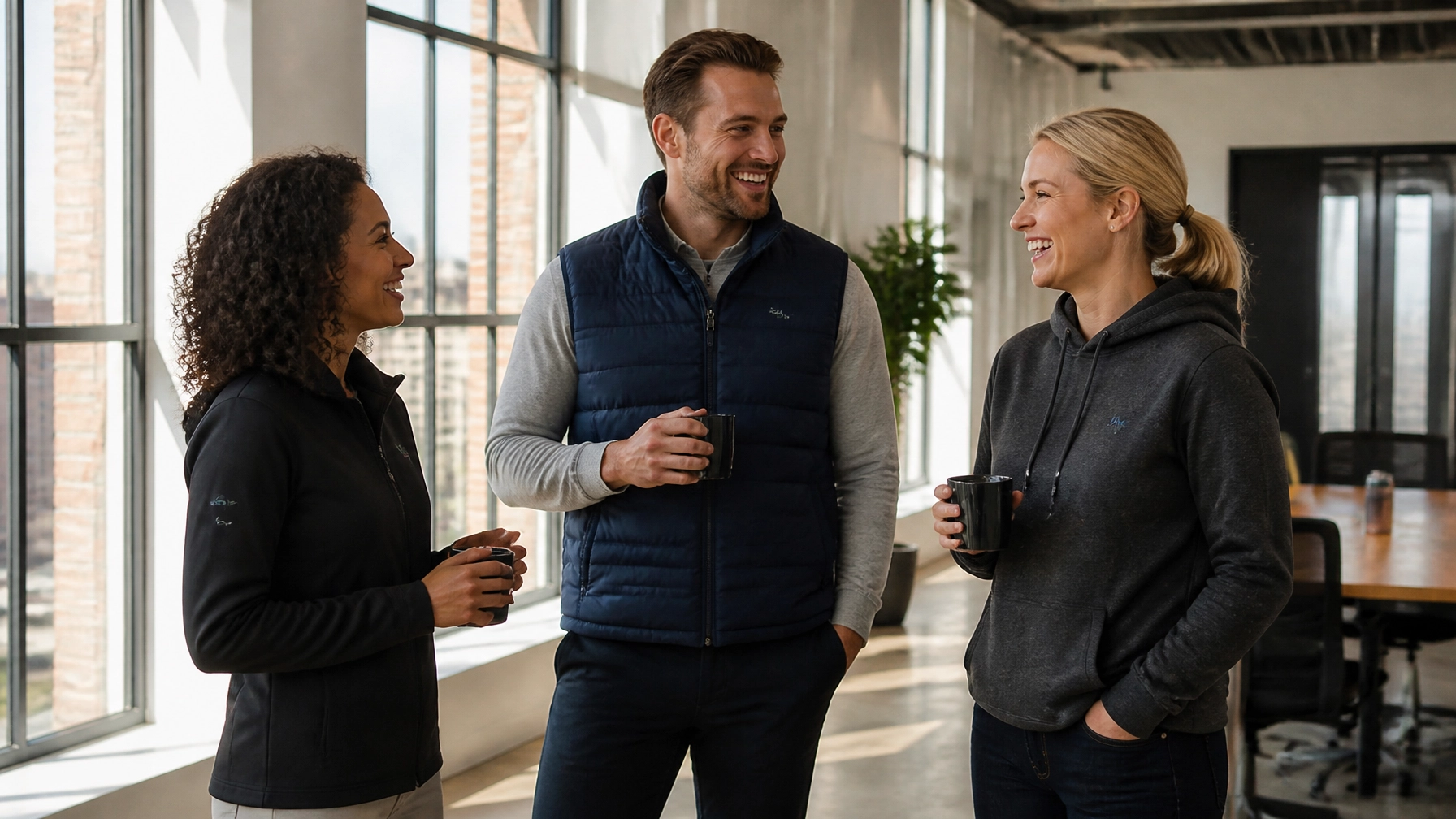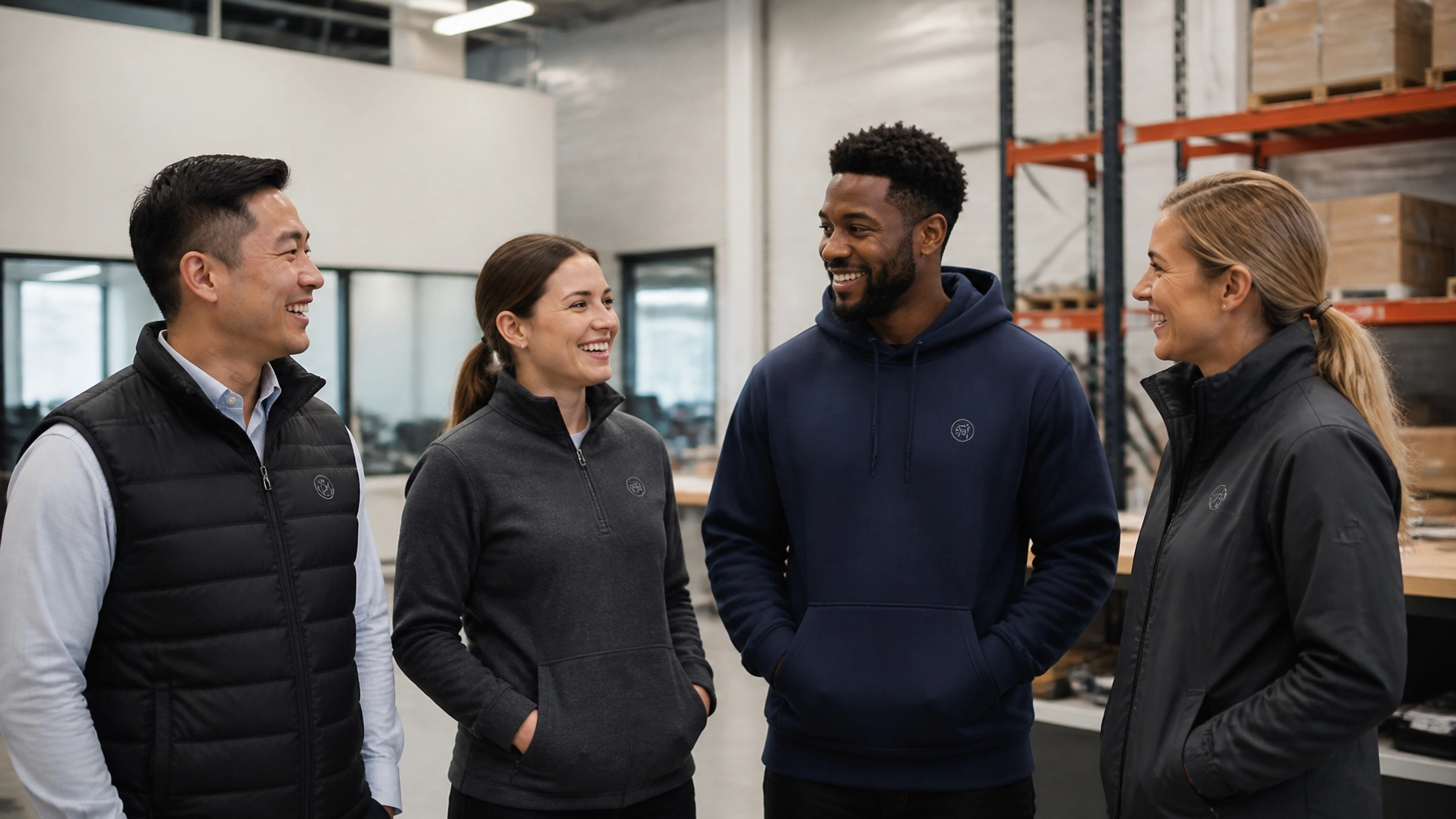
Picture this: It’s mid-January in the Midwest. The wind is howling outside like a hungry wolf, and the temperature has dropped into the "why do I live here?" range. Your team arrives at the office or the job site, shivering in a mismatched assortment of old college hoodies and neon-colored ski jackets they’ve had since the early 2000s. Your brand identity? Currently buried under layers of generic polyester and regret.
It doesn’t have to be this way.
Equipping your team with custom winter corporate apparel isn’t just about keeping them from turning into human popsicles; it’s about culture, visibility, and making sure your crew looks like a cohesive, professional unit, even when the weather is doing its best to make them look like extras from a survival movie.
But where do you start? Between "fleece weights" and "DTF transfers," the world of branded winter apparel can feel like a blizzard of jargon. Don’t panic. We’ve put together the ultimate guide for HR managers and operations gurus to navigate the frost. (Grab a coffee. This is going to be good.)
The Science of Warmth: Choosing Fabric Weights for Real Winters
If you’re operating in a place where "winter" is just a light drizzle, you can skip this. But if you’re in the Midwest (or anywhere that actually gets snow), fabric weight is the difference between a happy employee and a grumpy one.
Here’s the fast answer: for custom winter apparel, lightweight layers work best indoors, midweight pieces are ideal for everyday commuting, heavyweight hoodies handle cold warehouses well, and insulated outerwear is the right move for outdoor crews. In other words, "winter apparel" is not one thing. It’s a whole cast of characters.
Fabric weight is usually measured in ounces (oz) or grams per square meter (GSM). That number tells you how substantial the fabric feels and, in many cases, how warm and durable it will be. Not always. But often enough that it matters. A lot.
Here’s the expanded breakdown for your gear:
- Ultra-Lightweight (3–5 oz): Think performance base layers, long-sleeve tees, and moisture-wicking quarter-zips. These are best when your team is moving between heated interiors, vehicles, and quick outdoor stops. Great for layering under fleece or softshell jackets.
- Lightweight (5–7 oz): Think thin quarter-zips, jersey hoodies, or lighter fleece pullovers. Great for indoor office layering where the thermostat is set to a reasonable 68 degrees and nobody wants to feel like a marshmallow.
- Midweight (8–10 oz): The "Goldilocks" zone. Most high-quality hoodies and standard fleeces land here. Perfect for daily wear, commuting, school staff apparel, light warehouse work, and teams that need one versatile layer that doesn’t overthink things.
- Heavyweight (11–13 oz): This is the "big leagues." If your team is working in a drafty warehouse, managing outdoor loading zones, or walking jobsites in late fall and winter, this weight range earns its keep. A 12 oz hoodie feels like a warm hug from a very large, soft bear.
- Super-Heavyweight (14 oz and up): These are premium workwear-style sweatshirts, thermal-lined hoodies, and rugged outer layers designed for serious cold and serious wear. If your team says things like, "It’s not that bad out," while standing in sleet, this category is for them.
- Insulated Outerwear Weights: Puffers, parkas, and insulated jackets don’t always compare neatly by ounce weight alone because fill type, shell construction, and lining matter just as much. Translation: a lighter insulated jacket can outperform a heavier sweatshirt if it blocks wind and traps heat effectively.
How to Match Fabric Weight to the Workday
Picture this: your office coordinator wants a polished quarter-zip for client visits, your warehouse supervisor needs something warmer for the loading dock, and your field rep is outside half the day in a wind tunnel disguised as a parking lot. Same company. Very different winter realities.
That’s why the smartest custom winter corporate apparel programs use a layered approach:
- For office teams: lightweight to midweight quarter-zips, sweaters, and microfleece
- For warehouse teams: midweight to heavyweight hoodies, fleece jackets, and insulated vests
- For field teams: softshell jackets, insulated puffers, and weather-resistant workwear
- For hybrid climates: one branded midlayer plus one outerwear option so employees can adapt
Fabric Type Comparison Table
| Fabric Type | Best Use Case | Warmth Level | Durability |
|---|---|---|---|
| Microfleece | Indoor layering, office wear, travel | Light/Moderate | High |
| Polar Fleece | Office layering, active movement | Moderate | High |
| Softshell | Windy job sites, light rain | Moderate/High | Exceptional |
| Sherpa/High-Pile | Maximum cozy vibes, casual wear | Extreme | Moderate |
| Puffer (Synthetic) | Outdoor field work, travel | High | Moderate |
| Canvas Workwear | Tough environments, warehouse, construction | Moderate/High | Exceptional |
| Heavyweight Cotton/Poly | Warehouse work, classic branding | Moderate/High | High |
| Performance Knit | Athletic teams, active staff, base layers | Light/Moderate | High |
Real-World Winter Apparel Examples by Weight
Need examples? Let’s make this real:
- A 6 oz performance quarter-zip is great for sales teams, school administrators, and office staff who want a clean branded look without overheating by 10:17 AM.
- An 8.5 oz fleece hoodie is a strong everyday option for company stores, onboarding kits, and employee appreciation gifts.
- A 10 oz pullover hoodie hits the sweet spot for mixed-use teams who split time between indoors and outdoors.
- A 12 oz heavyweight hoodie is ideal for warehouse crews, logistics teams, and jobsite supervisors who need warmth and durability.
- A thermal-lined full-zip hoodie works well for teams that want the comfort of a sweatshirt with a little more muscle.
- A softshell jacket with fleece backing is often the best choice for field staff because it blocks wind, sheds light rain, and layers beautifully.
- An insulated puffer vest is perfect for travel-heavy teams, event crews, and anyone who needs core warmth without bulky sleeves.
- A parka-length insulated jacket makes sense for serious outdoor exposure, snow removal, transportation teams, and cold-climate operations.
Bottom line: the best winter branded apparel program isn’t built around one hero item. It’s built around actual use. Revolutionary, right?
The Winter Style Guide: What’s Hot When It’s Cold
Gone are the days when "corporate apparel" meant a boxy, scratchy sweater that everyone hid in the back of their closet. In 2026, branded winter apparel is actually, dare we say it, cool.
Here’s the short answer: the best custom winter apparel styles for teams include quarter-zips, heavyweight hoodies, softshell jackets, puffers, workwear jackets, and fleece layers. The right mix depends on whether your team works at desks, on docks, on jobsites, or somewhere in between.
1. The Quarter-Zip Fleece: The Office MVP
The quarter-zip is the undisputed king of the modern office. It’s professional enough for a Zoom call with a client but comfortable enough for a 3 PM snack run. Brands like Nike and Eddie Bauer have perfected this look.
- Best for: office staff, banking teams, sales reps, leadership gifts
- Why it works: polished look, easy layering, broad size appeal
- Pro Tip: Go for a heathered fabric. It hides lint and looks much more expensive than it actually is.
2. The Heavyweight Hoodie: The Culture Builder
Nothing says "we’re a team" like a high-quality, branded hoodie. But beware: if you buy cheap, thin hoodies, they’ll end up as car-wash rags. Invest in a 10 oz or 12 oz blend. Your employees will literally live in these. (Seriously, you might have to remind them to wash them.)
- Best for: warehouse crews, school staff, recruiting kits, company swag programs
- Why it works: high wearability, casual comfort, strong logo visibility
- Style tip: Offer both pullover and full-zip versions if your team includes people who run hot, layer often, or just hate pulling hoodies over their heads before coffee.
3. The Puffer Vest: The Layering Legend
Vests are the secret weapon of corporate wardrobes. They keep the core warm while leaving the arms free for, you know, actually working. A sleek black puffer vest with a subtle tone-on-tone logo? Peak professional.
- Best for: sales teams, event staff, drivers, travel-heavy employees
- Why it works: easy movement, premium look, ideal for in-between weather
- Style tip: Vests shine when paired with long-sleeve polos, flannels, or lightweight pullovers.
4. The Softshell Jacket: The Field Favorite
If your team is out and about, the softshell is the way to go. It’s wind-resistant, water-repellent, and looks incredibly sharp. It’s the jacket for the person who needs to look like they’re in charge, even in a gale-force wind.
- Best for: field service teams, logistics, operations managers, recruiters at outdoor events
- Why it works: weather resistance without full-on parka bulk
- Style tip: Choose darker colors for jobsites and lighter neutrals for client-facing teams.
5. The Full-Zip Hoodie: The Everyday Utility Player
The full-zip hoodie is the Swiss Army knife of branded winter apparel. Easy on. Easy off. Great over a tee, polo, or thermal layer.
- Best for: mixed indoor/outdoor teams, fulfillment centers, event crews
- Why it works: versatile layering and broad comfort appeal
- Style tip: Full-zips often pair better with left-chest logos than giant front graphics if you want a more polished branded look.
6. The Sherpa or High-Pile Fleece: The Cozy Overachiever
Some pieces just scream, "Take me camping or to a Monday meeting." Sherpa fleece lives in that zone. It’s cozy, trendy, and surprisingly effective as an employee gift item.
- Best for: holiday gifts, executive swag, casual office cultures
- Why it works: premium feel, memorable look, strong perceived value
- Watch-out: It’s not always ideal for rugged jobsite use or highly detailed logo placement.
7. The Insulated Work Jacket: The Tough-Love Option
For teams who work outdoors, on loading docks, or in industrial environments, fashion can’t be the only plan. You need insulation, abrasion resistance, and enough durability to survive actual work. Wild concept, I know.
- Best for: construction, utilities, transportation, warehouse leadership
- Why it works: warmth, toughness, practical pockets, weather protection
- Style tip: Pair rugged jackets with embroidered logos and simple colorways for a clean, professional look.
8. The Packable Puffer Jacket: The Travel Hero
This is the piece employees keep in the car, throw in a carry-on, and reach for at every chilly conference center known to humankind.
- Best for: remote teams, regional managers, conference and tradeshow staff
- Why it works: lightweight warmth, upscale appearance, easy storage
- Style tip: A minimalist embroidered logo gives this style a retail-brand feel rather than a giveaway vibe.
9. The Performance Hoodie: The Modern Hybrid
Performance hoodies blend athletic styling with workplace practicality. They are lighter, smoother, and better at moisture management than traditional fleece hoodies.
- Best for: active teams, wellness programs, startup cultures, outdoor events
- Why it works: modern silhouette, sport-inspired feel, all-season wear
- Style tip: Great candidate for DTF if your logo has gradients, fine lines, or bold color.
10. The 3-in-1 Jacket System: The Strategic Flex
If your workforce spans climates or roles, 3-in-1 jackets can be a smart investment. They typically combine a weather-resistant shell with a removable insulated liner or fleece inner jacket.
- Best for: companies with outdoor staff, variable climates, or safety-sensitive roles
- Why it works: year-round versatility and better cost efficiency over time
- Style tip: If you’re ordering for managers and field staff, this type of piece can cover a lot of use cases with one SKU.
How to Build a Better Winter Apparel Mix
A strong winter style guide usually includes more than one apparel lane:
- Professional lane: quarter-zips, microfleece, puffers, softshells
- Casual culture lane: heavyweight hoodies, full-zips, sherpa fleece
- Workwear lane: insulated jackets, rugged hoodies, canvas outerwear
- Travel lane: lightweight puffers, vests, packable layers
That’s the secret. Don’t force one jacket to do the job of five different pieces. That’s like bringing a butter knife to a snowplow fight.

Branding Magic: Embroidery vs. DTF vs. Screen Printing
You’ve picked the perfect jacket. Now, how do you put your logo on it without making it look like a middle-school gym uniform?
Here’s the quick answer: embroidery is usually best for jackets, fleece, vests, and premium corporate outerwear; DTF is best for detailed, colorful artwork on hoodies and performance pieces; and screen printing remains the most cost-effective choice for large apparel runs with simpler designs.
Embroidery: The Gold Standard
For winter gear, embroidery is almost always the winner. It’s durable, it handles thicker fabrics like fleece and softshells beautifully, and it brings serious perceived value.
- Best for: jackets, vests, quarter-zips, polos, work shirts, beanies
- The Vibe: "We’ve been in business a long time and we know what we’re doing."
- Big strengths: durability, professional appearance, texture, retail-quality look
- Potential drawbacks: not ideal for tiny text, complex gradients, or very large designs
Embroidery works especially well when your goal is subtle, elevated branding. Think left-chest logos, sleeve hits, hat fronts, or back yokes on premium outerwear. It also performs well over time, which matters when you’re decorating pieces employees may wear for years instead of months.
Best use cases for embroidery:
- Softshell jackets with left-chest logos
- Fleece quarter-zips for office and sales teams
- Puffer vests for executive gifting
- Beanies and knit caps for winter kits
- Rugged work jackets for field crews
Embroidery watch-outs:
- Super-detailed logos may need simplification
- Puffy insulation or very slick shells can require special placement strategies
- Large embroidered areas can add weight or stiffness to lightweight garments
DTF (Direct-to-Film): The New Kid on the Block
DTF is the rising star of 2026. It allows for incredibly detailed, full-color designs that stretch with the fabric. Unlike old-school heat transfers, it doesn’t feel like a plastic billboard glued to your chest.
- Best for: intricate logos, multicolor graphics, smaller runs, performance fabrics, modern hoodie designs
- The Vibe: modern, vibrant, and tech-forward
- Big strengths: color detail, flexibility, lower setup barriers, excellent for complex artwork
- Potential drawbacks: may not feel as premium as embroidery on executive outerwear
DTF is especially useful when your artwork includes gradients, fine lines, multiple colors, or design elements that embroidery would turn into a tiny stitched mystery. It also works well when you want hoodie graphics beyond the standard left chest.
Best use cases for DTF:
- Performance hoodies with full-color team marks
- Employee appreciation sweatshirts with larger front or back graphics
- Trend-forward company store apparel
- Small-batch branded gear where screen setup costs don’t make sense
DTF watch-outs:
- Not every outerwear shell is the right candidate
- Placement matters more on textured or lofty fabrics
- It’s excellent for many garments, but premium fleece and executive jackets often still look better with embroidery
Screen Printing: The Bulk Classic
Classic. Reliable. Cost-effective. If you’re ordering 500 hoodies for a massive outdoor event, screen printing is your friend. However, it’s not ideal for textured fleece or many waterproof jackets.
- Best for: large runs of hoodies, tees, crewnecks, and event apparel
- The Vibe: high-energy, bold, and efficient
- Big strengths: cost efficiency at volume, vibrant prints, strong durability on the right garments
- Potential drawbacks: setup costs, less flexible for tiny runs, limited fit with textured outerwear
Screen printing is often the best choice for bold chest prints, oversized back art, event programs, spirit wear, and employee giveaways where you need strong visual impact at scale.
Best use cases for screen printing:
- 250+ hoodies for a recruiting push
- Event sweatshirts for outdoor winter activations
- Seasonal employee merch drops
- Casual branded apparel sold through an online company store
Screen printing watch-outs:
- Not ideal for puffers, sherpa fleece, or many waterproof shells
- Fine detail can be limited depending on art style
- Fewer colors and larger runs usually produce the best economics
How to Choose the Right Decoration Method
If you want the simplest possible decision tree, here it is:
- Choose embroidery for premium outerwear, fleece, hats, and long-term corporate wear.
- Choose DTF for detailed or colorful logos on hoodies, lightweight layers, and modern branded apparel.
- Choose screen printing for high-volume casual apparel with bold graphics.
Decoration Method Comparison Table
| Method | Best For | Pros | Watch-Outs |
|---|---|---|---|
| Embroidery | Jackets, quarter-zips, vests, beanies | Premium look, durable, textured finish | Less ideal for tiny details or gradients |
| DTF | Hoodies, performance wear, detailed art | Full color, flexible, great for small runs | Can feel less premium on executive outerwear |
| Screen Printing | High-volume hoodies and tees | Cost-effective at scale, bold graphics | Limited for textured or insulated outerwear |
The smartest branded winter apparel programs don’t pick one method and call it a day. They match the decoration to the garment, the audience, and the budget. Fancy concept. Works great.

Inclusivity Matters: Sizing for the Real World
Here is a radical thought: not everyone on your team is a "Men’s Large." (Shocking, we know.)
One of the biggest mistakes companies make is ordering a "unisex" batch of apparel and hoping for the best. "Unisex" is often just code for "Men’s cut that fits a chunk of your workforce poorly." To run a truly successful corporate apparel program, you need a broader, more inclusive sizing strategy.
Here’s the short answer: offer multiple silhouettes, extended sizes, tall options, and fit flexibility across your custom winter apparel program. If people feel comfortable in the gear, they’ll actually wear it. Which is, last time I checked, the whole point.
1. Offer Ladies’ Cuts and Modern Fits
Ladies’ styles are not just smaller versions of men’s garments. They are shaped differently through the shoulder, chest, waist, and hip. Providing a specific ladies’ option shows your team that you actually planned for real humans, not mannequin clones.
At the same time, don’t assume every employee wants a fitted silhouette. Some prefer relaxed or unisex cuts. The win is offering options rather than forcing one pattern onto everybody.
2. Extend Size Ranges Beyond XL
Don’t stop at XL. Make sure your catalog includes 2XL, 3XL, and 4XL at a minimum when available, and consider 5XL or 6XL in core styles if your selected brands support it. Nothing tanks morale faster than making one employee feel like the team gear wasn’t meant for them.
For winter apparel, this matters even more because people may layer underneath. A jacket that technically fits over a T-shirt may not fit over a hoodie, thermal, or sweater.
3. Add Tall Sizes Where It Makes Sense
For the giants in your IT department, distribution team, or field crew, tall sizes like LT, XLT, 2XLT, and 3XLT are a godsend. No one likes a jacket that ends three inches above their belt line or sleeves that stop mid-forearm like they lost a bet.
Tall sizes are especially useful for:
- softshell jackets
- quarter-zips
- full-zip hoodies
- insulated outerwear
- long-sleeve layering pieces
4. Think About Layering Room, Not Just Chest Measurement
Winter sizing isn’t only about whether a garment can zip. It’s about whether it still feels comfortable over other layers. A fitted quarter-zip for office wear may size differently than an outerwear piece that needs room over a hoodie.
A smart rule: ask whether the piece is meant to be a base layer, midlayer, or outer layer. That will influence fit guidance and reduce returns, exchanges, and those "I can technically wear it if I never inhale" complaints.
5. Use Size Collection Instead of Guesswork
If you’re buying for more than a handful of people, do not guess. Guessing sizes for a company-wide order is like doing your taxes by horoscope. Use an employee size collection process instead.
A temporary size collection store or employee ordering portal makes this much easier. Team members can choose approved garments, enter their own sizes, and help ensure better fit accuracy before production begins. Cleaner process. Fewer awkward exchanges. Better adoption.
6. Consider Accessibility and Comfort Preferences
Some employees prefer softer fabrics, tag-free construction, stretch panels, or easier closures due to sensory needs, mobility considerations, or simple day-to-day comfort. While not every apparel line offers every feature, it’s worth prioritizing easy-wear styles that don’t feel stiff, scratchy, or overly restrictive.
In practice, that often means:
- avoiding overly boxy budget pieces when possible
- offering full-zip options alongside pullovers
- selecting soft linings for outerwear
- choosing flexible fabrics for active teams
7. Build an Inclusive Core Collection
Instead of offering 27 random garments and calling it a strategy, build a core collection that covers most fit needs well. For example:
- one ladies’ quarter-zip
- one unisex or men’s quarter-zip
- one full-zip hoodie in extended sizes
- one heavyweight pullover hoodie
- one softshell jacket with tall options
- one insulated vest or puffer
That gives your team meaningful choice without turning the program into a choose-your-own-chaos adventure.
The big idea? Inclusive sizing is not a "nice to have." It’s one of the fastest ways to improve wear rates, employee satisfaction, and the ROI of your branded apparel investment.
Logistics: Making Distribution Not Suck
If the thought of sorting 200 jackets in your breakroom makes you want to hide under your desk, you’re doing it wrong. This is where Proforma Awards Print & Promotions steps in to save your sanity.
The Online Company Store
Imagine a world where you don’t have to chase people down for their sizes. With an online company store, your employees log in, pick their item, select their size (from a curated list you’ve already approved), and hit "submit." Simple. Genius. Impact.
The Size Collection Store
This is the "Pro" move. If you’re doing a company-wide gift, we can set up a temporary size collection store. Employees enter their info, and we compile the data into one perfect order. No spreadsheets. No "I think Bob is a Medium?" guesswork.
Kitting & Multi-Location Distribution
Got teams in Chicago, Dallas, and a few remote workers in Montana? No problem. We handle the kitting and fulfillment. We can pack a "Winter Welcome Kit": think jacket, beanie, and a branded mug: and ship it directly to every individual’s doorstep. You stay in your office; we handle the cardboard cuts.

The Heavy Hitters: Top Brands for 2026
When you put your logo next to a brand people already trust, that "cool factor" rubs off on you. We work with the best in the business to ensure your team feels like they’re wearing retail-quality gear.
Here’s the short answer: the best winter apparel brands depend on your audience. Nike and Adidas work well for athletic polish, Carhartt dominates rugged workwear, Eddie Bauer and The North Face bring premium outdoor credibility, and Port Authority remains a go-to for value, size range, and consistency.
Best Brand Recommendations by Use Case
- Nike & Adidas: For the athletic, high-performance vibe. Great for corporate wellness initiatives, recruiting kits, sales teams, and employee programs where you want the brand name to carry some swagger.
- Carhartt: For the "I actually get stuff done" rugged look. Essential for construction, logistics, warehouse, transportation, and field service teams that need warmth and durability over fluff.
- The North Face & Eddie Bauer: For premium outdoor quality that lasts for years. These brands are excellent for leadership gifts, travel-heavy employees, client-facing field teams, and companies that want a polished, upscale outerwear program.
- Port Authority: The king of value and variety. Great for large teams where budget, consistency, and broad sizing matter.
- Sport-Tek: A strong option for performance layers, team hoodies, and activewear-inspired apparel with approachable pricing.
- District: Great for modern, soft casual pieces and company store apparel that feels less stiff and more retail.
- CornerStone: A practical choice for industrial workwear, safety-minded teams, and durable utility styles.
- Mercer+Mettle: Ideal when you want elevated corporate style with modern silhouettes for office and leadership wear.
- OGIO: Excellent for sleek, branded outerwear with a modern edge, especially for sales, tech, and event teams.
- TravisMathew: A premium choice for polished casual layering, especially if your culture leans upscale, modern, and a little golf-adjacent. (You know the look.)
Quick Brand Matching Guide
| Brand | Best For | Standout Strength |
|---|---|---|
| Nike | Office, athletic, premium casual | Strong brand appeal |
| Adidas | Performance layering, modern team wear | Sport-driven style |
| Carhartt | Rugged jobsites, outdoor crews | Durability and warmth |
| The North Face | Premium outerwear | Outdoor credibility |
| Eddie Bauer | Corporate outerwear, travel | Versatile polish |
| Port Authority | Large programs, broad sizing | Value and variety |
| Sport-Tek | Active teams, casual swag | Performance fabrics |
| District | Retail-inspired casual wear | Softness and style |
| CornerStone | Industrial and utility apparel | Tough construction |
| Mercer+Mettle | Modern office apparel | Elevated corporate style |
A Simple Way to Narrow the Brand List
If your team is mostly office-based, start with quarter-zips, microfleece, and puffers from Eddie Bauer, Mercer+Mettle, Nike, or Port Authority.
If your team is operational or field-based, start with Carhartt, CornerStone, Port Authority workwear, and rugged softshell or insulated options.
If you need a mixed program for different departments, combine premium office layers with rugged field styles under one coordinated color palette. Same brand story. Different gear. No nonsense.
And yes, brand matters. People are dramatically more likely to wear custom branded winter apparel when the garment itself feels trustworthy, comfortable, and maybe just a little cooler than expected.

The Real Kicker: Why Wait for the First Frost?
Here is the secret: everyone waits until the first snowstorm to order their winter gear. That’s when lead times get long and stock starts to vanish.
The smart move? Start your custom winter corporate apparel project in September. This gives you plenty of time for samples, size collection, and production. Your team will have their gear in hand the moment the mercury drops, and you’ll look like a logistics wizard.
Banish the boring. Leverage the layers. Ditch the "one-size-fits-most" mentality.
Ready to gear up? Whether you need 20 high-end jackets for your executive team or 2,000 heavyweight hoodies for a multi-state workforce, we’ve got you covered. Reach out to Proforma today, and let's build something your team will actually want to wear.
Simple. Genius. Impact.