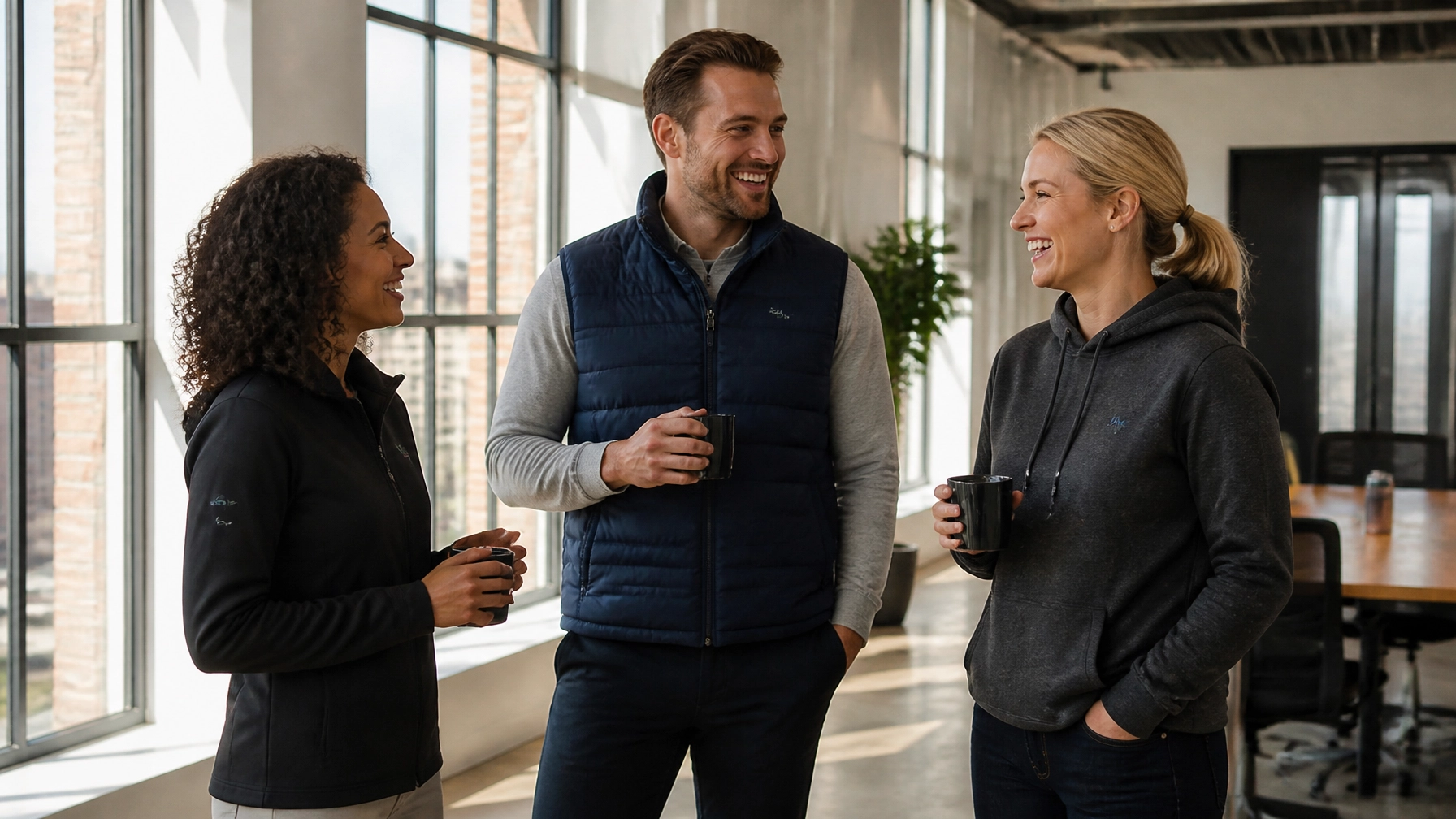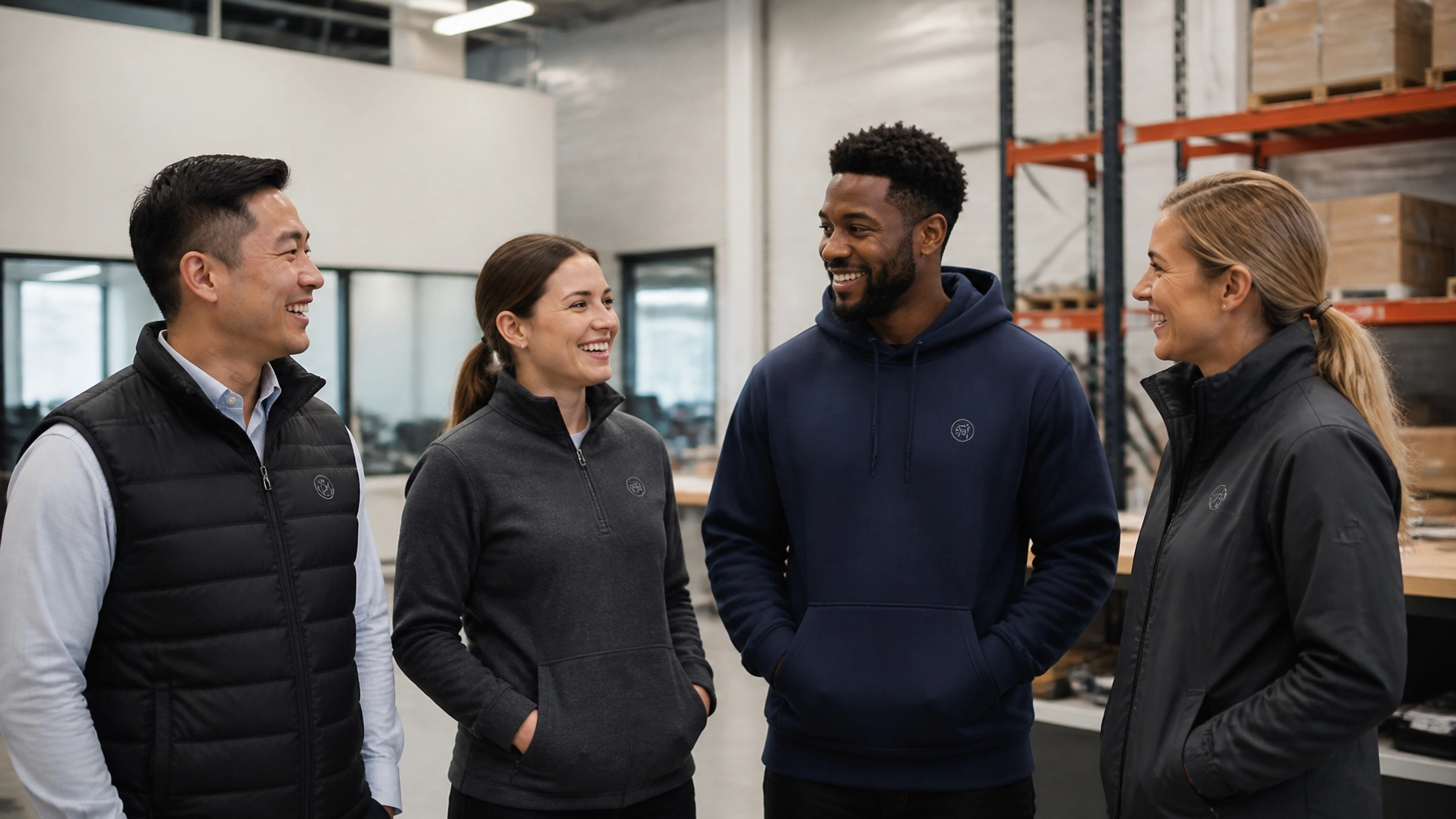
Picture this: You’re at a high-stakes networking event (the kind where the coffee is actually drinkable and people are wearing shoes that cost more than my first car). You spot someone across the room wearing a sleek, high-quality navy quarter-zip. You find yourself squinting. Is that a Patagonia? A Peter Millar? Wait, is that a tiny, elegant logo for a tech startup on the sleeve?
You’re intrigued. You’re curious. You might even walk over just to figure out what that logo is.
Now, picture the alternative: A guy walks in wearing a neon orange t-shirt with a logo the size of a dinner plate across his chest. You don’t need to squint. You don’t need to wonder. In fact, you’ve already decided you’re going to avoid him because he looks like a walking billboard for a lawn care company that went bankrupt in 2014.
Welcome to the era of Subtle Branding.
For years, the "old-school" way of doing promotional products was all about volume and visibility. If the logo wasn't big enough to be seen from space, it wasn't working, right? Wrong. In 2026, the "louder is better" philosophy is officially dead and buried. Today, the most effective brand awareness isn't a shout; it’s a whisper. It’s "Quiet Luxury." It’s Stealth Wealth for the corporate world.
In this ultimate guide, we’re peeling back the curtain on why subtle branding is the secret weapon of the world’s most successful companies, and how you can use it to make your brand the one everyone actually wants to wear.
The Death of the "NASCAR Jacket" Strategy
Let’s be real: nobody wants to look like they just finished a lap at the Daytona 500 while they’re grocery shopping. (Unless they did just finish a lap at the Daytona 500, in which case, cool job, man.)
For decades, marketers treated promotional apparel like a plot of real estate. They wanted to cram the logo, the URL, the phone number, and maybe a QR code (shudder) onto every available square inch of fabric. The result? Merch that lived in the back of a closet until it was eventually used to wash a car or donated to a thrift store where it would sit, unloved, for eternity.
Banish the billboard.
When you make your branding too loud, you’re essentially telling the recipient, "I don’t care if you look good; I just want you to advertise for me." It’s selfish. And in a world where people value authenticity and personal style, it’s a total turn-off.
According to PPAI (Promotional Products Association International), the shift toward retail-quality, minimalist design is one of the biggest drivers of product longevity. If people don’t feel like a corporate shill while wearing your gear, they’ll wear it more often. It’s simple math.
The Psychology of the "Secret Club"
Why does subtle branding work so well? It’s all about the "Secret Club" effect.
When a logo is understated, maybe it’s a tiny tonal embroidery on the cuff or a small hem tag, it creates a sense of exclusivity. It rewards the people who are "in the know." It’s a conversation starter rather than a conversation ender.
Think about it:
- Loud Branding: "Oh, look, a Google shirt." (End of thought.)
- Subtle Branding: "Wait, that’s a really nice hoodie. Oh, is that the Proforma logo tucked away on the pocket? I didn't know they did gear like that." (Start of a conversation.)
This "Quiet Luxury" approach signals confidence. Your brand is so established, so cool, and so high-quality that you don’t need to scream for attention. You’re letting the quality of the item do the heavy lifting. This is especially effective in high-tier industries like the financial sector, where understated elegance is the name of the game.
Quality Over Quantity: The Math of Impressions
I know what you’re thinking. "But Penny, if the logo is smaller, won't I get fewer impressions?"
Let’s do some quick math. (Don't worry, it's the fun kind of math, not the "I'm crying over my taxes" kind.)
Imagine you buy 500 cheap, "loud" t-shirts for $5 each. They’re itchy, the fit is boxy, and the logo is massive. Most of those shirts will be worn exactly once (maybe to sleep in) before hitting the trash or the donation bin. Total lifetime impressions? Maybe 1,000.
Now, imagine you buy 100 high-end, retail-style hoodies for $25 each. The branding is a tiny, laser-etched patch on the sleeve. Because they’re comfortable and stylish, your recipients wear them every weekend for the next three years. They wear them to the gym, to the coffee shop, and on flights.

Total lifetime impressions? Tens of thousands. And more importantly, these are quality impressions. People see your brand associated with a high-quality product in a lifestyle setting. That’s brand awareness you just can’t buy with a billboard.
The "Retail Look": Why Employees Actually Want to Wear Your Gear
Your employees are your biggest brand ambassadors, or at least, they should be. But let’s be honest: are they wearing your current company merch because they want to, or because it’s "Casual Friday" and they ran out of clean clothes?
If you want your team to be walking advertisements for your company culture, you have to give them something they would actually buy with their own money.
We’ve seen a massive surge in Online Company Stores that focus exclusively on "retail-inspired" merch. We’re talking about brands like Nike, North Face, and Patagonia, but with a subtle corporate twist.
The Golden Rule of Corporate Apparel: If it wouldn't look out of place on a rack at Nordstrom, you’re doing it right.
When your team feels stylish, their confidence goes up. When they wear your gear out in the world, they’re showing they’re proud of where they work. But they only do that if the branding is tasteful. (Pro-tip: Ditch the "Staff" or "Employee of the Month" screen prints. Just… don't.)
Mastering the "Secret" Techniques
How do you actually achieve this "subtle" look? It’s not just about shrinking the logo; it’s about the method of application. Here are a few "pro" secrets we use at Proforma:
1. Tonal Embroidery
This is the holy grail of subtle branding. You use a thread color that is just one or two shades different from the fabric color. A black logo on a charcoal shirt. A navy logo on a royal blue cap. It catches the light just enough to be seen, but it doesn't scream for attention. It looks expensive. (Because it is… well, it looks it, anyway.)
2. Debossing and Embossing
Perfect for leather goods, journals, and tech accessories. Instead of printing ink on top of the surface, you press the logo into the material. It creates a tactile, 3D effect that feels permanent and high-end.

3. Hem Tags and Woven Labels
Instead of a giant chest print, try a small woven label sewn onto the bottom hem of a shirt or the side of a beanie. It’s a "retail" touch that makes the item feel like a piece of fashion rather than a giveaway.
4. Laser Etching
On metal drinkware or wooden items, laser etching is the way to go. It’s precise, it’s permanent, and it creates a monochromatic look that is far more sophisticated than a colorful screen print.
Subtle Branding for Events: Breaking Through the Noise
If you’re planning meetings, conferences, or events, the temptation is to go big. You want your brand to dominate the room. But remember: everyone else is doing the same thing.
The attendee who receives a high-quality, subtly branded tote bag is the one who will keep using it long after the conference is over. The attendee who gets a "loud" bag with 15 sponsor logos on it? That’s going straight to the hotel room trash can.
Focus on the "Hand-Off" Magic.
When you give someone a piece of merch that feels premium and looks understated, you’re giving them a gift, not a chore. You’re saying, "I value your time, and I want you to have something nice." That emotional connection is worth more than a hundred giant logos.

How to Pivot Your Strategy (Without Panicking)
Ready to ditch the "NASCAR" approach and embrace the subtle side of life? Here’s how to start:
- Audit Your Current Inventory: Take a cold, hard look at your merch. Is it something you would wear to a nice dinner? If the answer is "only if I was painting the house," it’s time for an upgrade.
- Focus on the Fabric: Spend more on the garment and less on the ink. A high-quality tri-blend tee with a tiny logo beats a 100% heavy cotton tee with a big logo every single time.
- Choose "Stealth" Locations: Think beyond the left chest. Try the back yoke (just below the collar), the sleeve cuff, or the hip.
- Leverage Kitting: If you’re sending out "Welcome Kits" or Holiday Gifts, use Kitting & Fulfillment to create a cohesive, subtly branded experience. The unboxing should feel like opening a retail package, not a box of promo gear.
The Real Kicker: It’s Better for the Planet
We can’t talk about 2026 trends without mentioning sustainability. The most sustainable promotional product is the one that doesn't get thrown away.
When you create high-quality, subtly branded items, you’re participating in the "Slow Promo" movement. You’re producing fewer items, but they’re staying in circulation for years. This reduces waste and aligns your brand with the values of modern consumers who are increasingly wary of "disposable" culture.
Conclusion: The Future is Understated
At the end of the day, brand awareness isn't about how many people see your logo; it’s about how many people remember your brand and how they feel when they think about it.
Subtle branding builds respect. It builds curiosity. It builds a long-term connection that "loud" branding just can’t touch. So, next time you’re sitting down to design your next batch of merch, ask yourself: "Am I screaming, or am I inviting them in?"
Simple. Genius. Impact.
Ready to elevate your brand with some "Quiet Luxury" of your own? Whether you're looking for Corporate Apparel that people actually want to wear or a custom online store to streamline your gear, we’re here to help you master the art of the whisper.
Let's make something they'll never want to throw away.