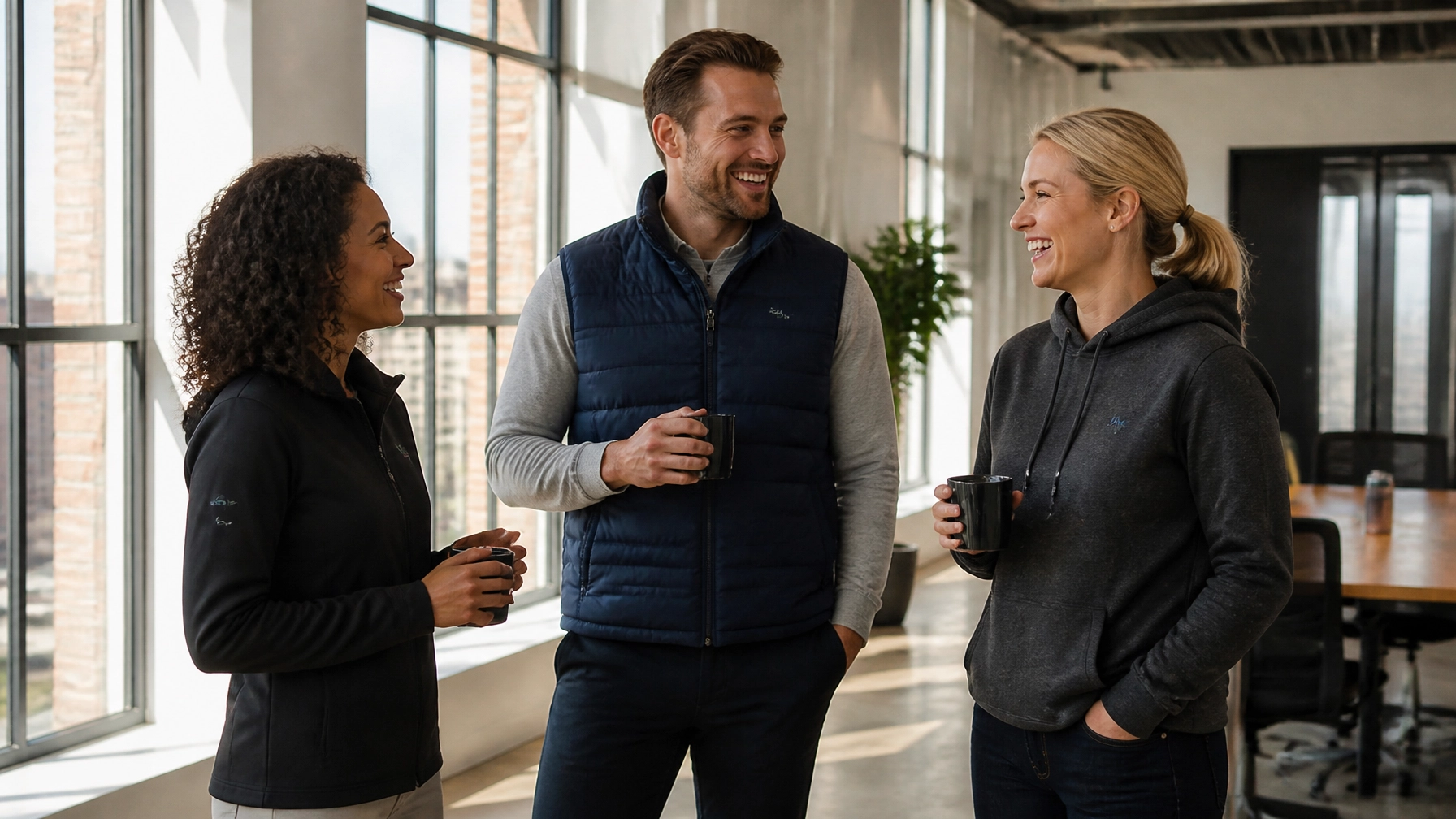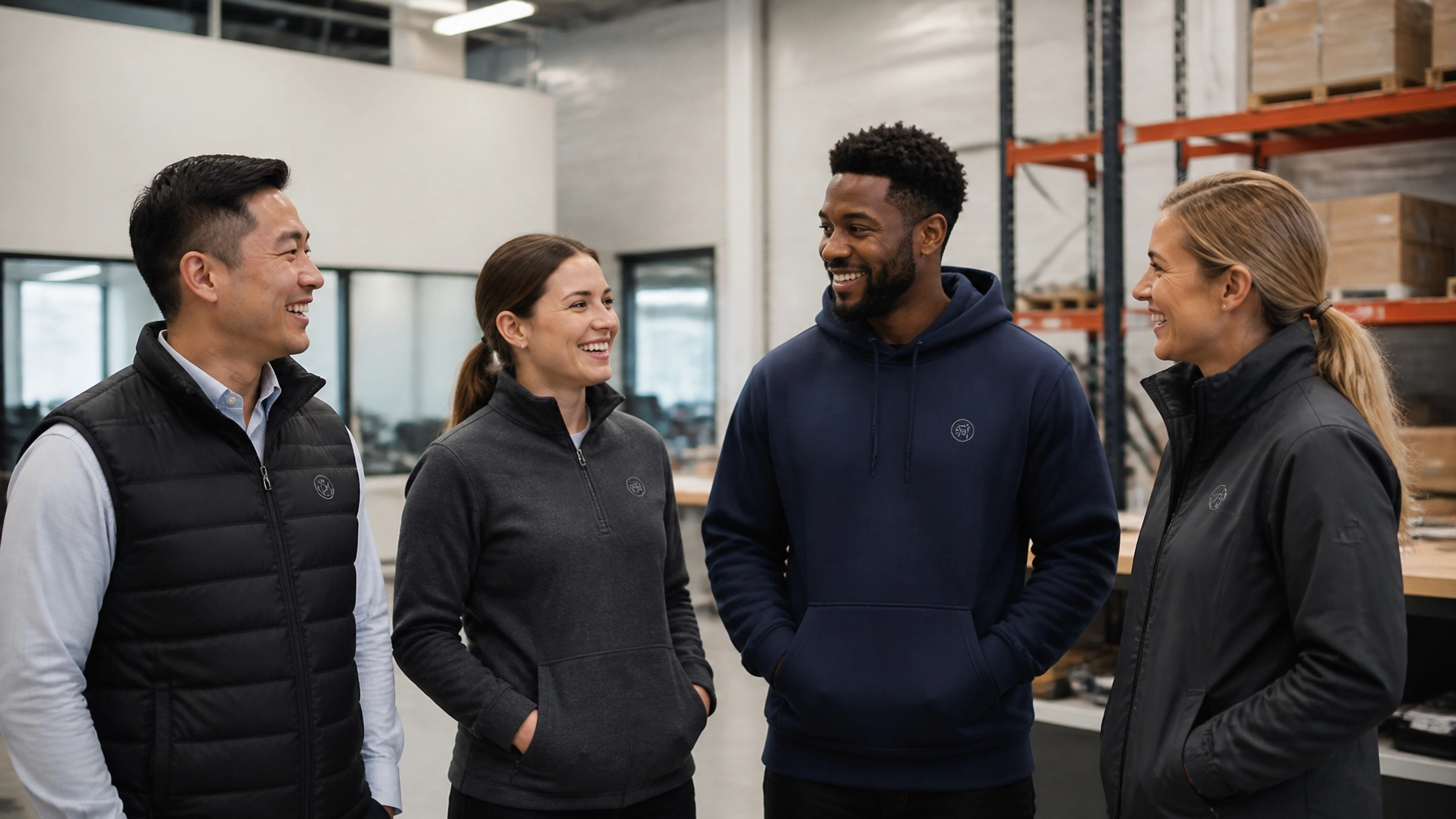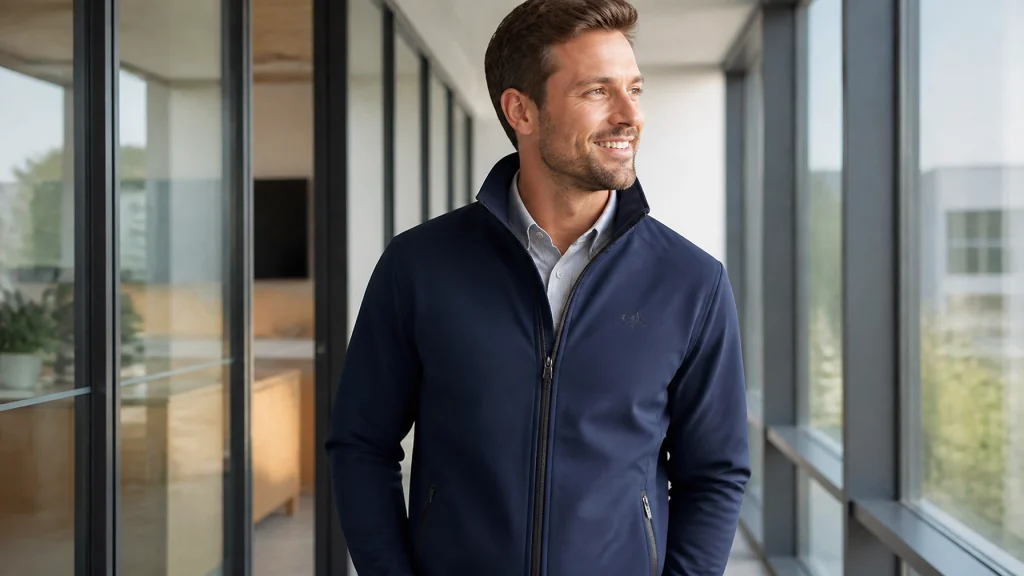
Picture this: It’s Monday morning. You’re scanning the office (or the Zoom tiles), and you see it. No, not the leftover birthday cake in the breakroom. You see your team, actually wearing the company gear. And they’re not wearing it because they ran out of clean laundry. They’re wearing it because it looks good.
For years, the "corporate gift" was synonymous with "things that eventually end up in a junk drawer or a donation bin." We’ve all been there. The scratchy, ill-fitting t-shirt that turns into a pajama top. The plastic water bottle that leaks after three washes. The "tech gadget" that requires four adapters you don’t own.
But things have changed. In 2026, the game isn't just about giving something; it’s about giving something that stays out of the landfill and on the person.
Welcome to the era of Premium Branded Outerwear.
At Proforma Awards Print & Promotions, we’ve watched this shift happen in real-time. In fact, branded outerwear has seen a staggering 34% year-over-year growth. Why? Because companies are finally realizing that a high-quality jacket is more than a gift, it’s a long-term investment in brand loyalty and visibility.
Let’s dive into why logo winter jackets and custom branded hoodies have officially dethroned every other gift category this year.
The Rise of "Quiet Luxury" (And Why Your Logo Should Be Smaller)
Remember the early 2000s? If a logo wasn't the size of a dinner plate across the chest, did the company even exist? (Short answer: Yes, and they probably had better taste).
In 2026, we are firmly in the "Quiet Luxury" era. This isn't just a buzzword for people who buy $500 plain white t-shirts; it’s a fundamental shift in how people want to represent brands. Your employees and clients don’t want to be walking billboards. They want to be stylish professionals who happen to be wearing a great jacket from a company they respect.

The trend now is subtle, sophisticated branding. Think tone-on-tone embroidery on the sleeve, a small minimalist patch on the hem, or a tiny logo on the back yoke (that’s the part between the shoulder blades, for those who don’t speak "apparel nerd").
Here’s the direct answer for the skimmers, the search engines, and the AI crawlers: quiet luxury outerwear works because it raises wear rates without making the recipient feel like free ad space. That’s the magic trick. A premium jacket with restrained branding feels retail. It feels intentional. It feels like something they chose, not something they were handed at a trade show between a stress ball and a stale cookie.
Picture a sleek black softshell with matte zipper pulls, subtle seam lines, and a tonal logo stitched just above the cuff. Or a heavyweight hoodie in washed charcoal with a tiny woven hem tag instead of a billboard-sized chest hit. That kind of branding whispers. And weirdly? Whispers often travel farther than shouting.
Quiet luxury in branded outerwear usually includes:
- Minimal logo placement: Sleeve, back yoke, hem tag, or chest embroidery under 3 inches wide.
- Premium decoration methods: Tone-on-tone embroidery, debossed patches, silicone transfers, and subtle woven labels.
- Elevated color palettes: Black, navy, charcoal, olive, stone, and earth tones that play nicely with real wardrobes.
- Retail-inspired silhouettes: Clean lines, structured fits, and modern layering pieces people would wear outside work hours.
Why does this matter so much right now? Because people are curating their closets like little personal brand managers. They’re mixing office wear, travel wear, athleisure, and weekend gear into one streamlined rotation. If your branded outerwear looks clunky, loud, or dated, it gets benched. Fast. If it looks polished and versatile, it becomes the grab-and-go favorite by the door.
When you choose branded winter apparel with an understated design, you're doing more than two things, honestly. But these are the big ones:
- Increasing Wearability: People will actually wear it to dinner, to the grocery store, on flights, at conferences, and on the weekend.
- Exuding Confidence: It says, "We’re so established we don’t need to scream our name from across the street."
- Protecting Brand Perception: A subtle logo on a premium piece reads higher-end than an oversized mark on a bargain-bin jacket.
- Supporting More Body Types and Style Preferences: Clean, simple designs tend to work better across a broader employee base, which means fewer “I’ll never wear this” reactions.
There’s also a practical bonus here: quiet luxury makes co-branding much easier. If you’re pairing your logo with a respected retail label, subtle placement keeps the garment balanced. Nobody wants a jacket that looks like three departments fought over it with a bedazzler. Keep it clean. Keep it chic. Keep it wearable.
Simple. Genius. Impact.
The "Retail-Quality" Revolution
If you want someone to value your gift, it has to feel like something they would actually buy for themselves at a high-end mall. This is where the "retailization" of promotional products comes in.
We aren't talking about "promotional grade" fabrics anymore. We’re talking about the heavy hitters. We’re talking about:
- Nike: For that performance-focused, "I just crushed a 5k before my 9 AM" vibe.
- TravisMathew: The king of the "Work-to-Green" transition.
- Carhartt: Because nothing says "we get stuff done" like rugged, reliable canvas.
- The North Face: For the ultimate in technical performance and status.
When you put your logo next to a brand like The North Face, you aren't just giving a jacket; you're borrowing their decades of brand equity. You’re telling the recipient, "We value you enough to give you the best." (And let’s be honest, who doesn’t love a little brand-name flex?)
Nike vs. Patagonia vs. The North Face vs. Carhartt: Which Brand Fits Your Team?
If you’re choosing premium branded outerwear in 2026, this is one of the most common questions: Which retail brand should we put our logo on? The answer depends on your audience, your culture, and the message you want the garment to send.
Here’s the plain-English breakdown:
Nike: Best for Active, Modern, Corporate-Casual Teams
Nike outerwear shines when you want a polished athletic look. Think stretchy performance layers, lightweight quarter-zips, sleek hoodies, and jackets that feel at home in offices, airports, and golf events. Nike says movement. Momentum. Energy. It’s ideal for sales teams, recruiting kits, wellness initiatives, and conference apparel.
- Best fit for: Corporate teams, sales reps, recruiting, event staff, and health-focused organizations
- Brand vibe: Athletic, polished, contemporary
- Watch-out: Some styles lean lighter, so they may be better for layering than deep-winter protection
Patagonia: Best for Sustainability-Minded and Culture-Driven Brands
Patagonia carries serious cachet for companies that want to signal values, not just style. Their fleeces, vests, and insulated layers have that "I care about quality, function, and the planet" energy. For certain audiences, that matters. A lot. Patagonia is especially effective for tech, consulting, creative firms, nonprofits, and organizations with strong ESG messaging.
- Best fit for: Values-led brands, tech teams, executive gifts, employee appreciation
- Brand vibe: Responsible, elevated, outdoorsy-smart
- Watch-out: Brand decoration guidelines can be more selective depending on product and placement
The North Face: Best for Premium Performance and Executive Appeal
The North Face is the boardroom-meets-basecamp option. It offers strong perceived value, broad recognition, and technical credibility. Their outerwear often lands beautifully in executive gifting, milestone recognition, top-performer programs, and premium new-hire packages. If you want recipients to open the box and go, “Okay, wow,” this brand is a contender.
- Best fit for: Executive teams, premium gifting, high-visibility company programs, winter events
- Brand vibe: Technical, prestigious, versatile
- Watch-out: Popular styles move fast, so planning ahead matters
Carhartt: Best for Rugged Crews and Hard-Working Environments
Carhartt doesn’t pretend to be precious. That’s the point. It’s tough, dependable, and deeply trusted by people who actually put gear through the wringer. If your team works in construction, warehousing, field service, manufacturing, logistics, or outdoor operations, Carhartt brings instant credibility. It says, “We respect the work.”
- Best fit for: Field teams, industrial crews, trucking, operations, and outdoor labor environments
- Brand vibe: Durable, practical, no-nonsense
- Watch-out: Heavier-duty styles may feel too rugged for polished office settings
Here’s the strategic move: match the brand to the wearer’s reality, not your wishful thinking. Don’t put a warehouse crew in delicate fashion fleece if they need abrasion resistance. Don’t hand a banking executive a stiff work jacket that belongs on a loading dock. Great outerwear programs work because they align brand identity with daily use. That’s where the repeat wear comes from. And repeat wear is where the ROI starts grinning like a villain in a heist movie.
ROI: Why a $150 Jacket is "Cheaper" Than a $5 Pen
Hold on, let’s talk about the Benjamins for a second. We know what you’re thinking: "Greg, a premium jacket costs way more than a mug."
You’re right. It does. But let’s look at the Return on Investment (ROI).
Marketing is a game of impressions. A $5 plastic pen might get 100 impressions before it runs out of ink or gets lost in the abyss of a car's center console. That’s $0.05 per impression.
A high-quality logo winter jacket, however, is kept for an average of five years. If your employee wears that jacket just 50 times a year (which is a low estimate for a good jacket), that’s 250 wears. If they see 10 people each time they wear it out… well, you do the math. (Actually, I’ll do it: that’s 2,500 impressions).
But the real kicker isn't just the number of impressions; it’s the quality of them. A jacket isn't a disposable item. It’s a piece of gear. It’s something people rely on to stay warm. When your brand is the thing keeping them cozy during a freezing commute, you’re building an emotional connection that a pen just can't touch.
Here’s the short answer for anyone comparing spend categories: premium branded outerwear often delivers lower cost per meaningful impression, longer lifespan, stronger retention value, and higher perceived gift value than low-cost promo items.
Let’s make that more concrete.
ROI Data Point #1: Lifespan Changes the Math
A disposable promo item lives a short, chaotic life. A premium jacket or hoodie can stay in rotation for years. Even if we use conservative numbers:
- 1 jacket
- 5-year lifespan
- 50 wears per year
- 10 impressions per wear
That equals 2,500 impressions. If the jacket costs $150, your cost per impression is about $0.06. And that’s with deliberately modest assumptions. If the wearer uses it for commuting, travel, weekend errands, school pickup, trade shows, and sporting events, those impressions climb fast.
ROI Data Point #2: Better Gifts Tend to Be Kept Longer
People keep premium apparel longer than novelty items because it has actual utility. A jacket solves a problem. It keeps you warm. It layers well. It travels well. It doesn’t ask to be useful someday; it is useful immediately. That practical value means more repeat wear, which means more brand exposure without buying another campaign every quarter. Not bad for one zipper-and-fabric overachiever.
ROI Data Point #3: Perceived Value Influences Emotional Response
There’s a huge psychological difference between receiving a low-cost giveaway and receiving a recognized retail-brand jacket. One says, “We had leftover budget.” The other says, “We thought this through.” That difference matters in:
- Employee recognition programs
- New-hire onboarding
- Client appreciation
- Sales incentives
- Executive gifting
A higher perceived value can improve how people remember the gesture, how often they use the item, and how positively they associate your brand with quality.
ROI Data Point #4: Outerwear Pulls Double Duty as Retention and Marketing
This is where outerwear gets sneaky in the best way. It’s not just a marketing item. It’s also a culture item. A good jacket can support:
- Employee morale
- Team unity
- Onboarding experience
- Recognition visibility
- Recruiting appeal at events and interviews
That means your spend isn’t stuck in one lane. It can support HR, operations, sales, and marketing at the same time. Try getting that kind of mileage out of a stress ball. I’ll wait.
ROI Data Point #5: Premium Apparel Reduces Wasteful Reorders
Cheap items often create a hidden tax: reorders nobody planned for. Replacing low-quality merch, dealing with leftovers nobody wants, or re-running programs because the first item flopped can quietly chew through budget. Better outerwear usually means:
- Higher redemption enthusiasm
- Lower disposal rates
- Fewer “Can we pick something else next time?” complaints
- More predictable program performance
And yes, that counts as ROI too. Saving your team from a merch mutiny is a legitimate operational win.
ROI Data Point #6: Branded Outerwear Performs Well in Hybrid Work
In-office signage lost some visibility in hybrid environments. Outerwear gained it. Why? Because people wear jackets and hoodies outside the office bubble. On coffee runs. At airports. At youth sports. On client visits. During school drop-offs. Your brand leaves the building, which is kind of the whole point.
If you want the strongest ROI from custom branded hoodies and logo winter jackets, three things matter most:
- Pick a style people already like wearing
- Keep branding tasteful and subtle
- Make sizing and distribution easy
Miss any one of those, and your ROI starts wobbling. Nail all three, and your outerwear program can outperform cheaper promo options by a mile.
Check out more on how we measure this in our guide to branded merchandise ROI.
The Outerwear Lineup: Which Style Fits Your Brand?
Not all jackets are created equal. Choosing the right style for your team is like choosing the right font, it sets the entire tone.

If you want the fast answer: the best outerwear style is the one your audience will actually wear in their real environment. Office team? Softshell or fleece. Field crew? Work jacket. Executive gift? Premium puffer or North Face shell. Campus recruiting? Heavyweight hoodie. See? Less mystery, more strategy.
1. The Softshell: The Corporate Chameleon
This is the MVP of the office. It’s water-resistant, wind-resistant, and looks sharp over a dress shirt or a polo. It’s the "I have a meeting at 2:00 but I might go for a walk at lunch" jacket.
- Best for: Sales teams, tech companies, and daily office wear.
2. The Puffer: The Trendsetter
Puffers (or "insulated jackets" if you want to be fancy) are everywhere. They are lightweight, incredibly warm, and have that modern, urban aesthetic.
- Best for: Winter gifts, outdoor events, and younger demographics.
3. The Fleece: The Comfort King
Fleece is the hug of the apparel world. It’s soft, breathable, and perfect for layering. With the rise of "athleisure," high-end fleeces from brands like Patagonia or Columbia have become staple office attire.
- Best for: Employee appreciation, internal teams, and casual Fridays.
4. The Custom Hoodie: The Universal Language
Don't sleep on the power of custom branded hoodies. In 2026, the hoodie has graduated from "gym clothes" to "legitimate fashion choice." A heavyweight, premium cotton hoodie is often the most-requested item in a branded kit.
- Best for: Campus recruiting, startup teams, onboarding kits, and casual culture brands.
5. The Quilted Vest: The Layering Legend
A good vest is like a great backup singer. It doesn’t hog the spotlight, but it makes the whole performance better. Quilted vests are perfect for transitional weather, indoor/outdoor workdays, and professionals who want warmth without bulk.
- Best for: Banking teams, golf events, trade show staff, and executive casual programs.
6. The Bomber Jacket: The Style Play
Bomber jackets bring a little swagger to the party. Clean rib trim, modern fit, and a fashion-forward silhouette make them ideal when your brand wants to look current, creative, and slightly less buttoned-up.
- Best for: Agencies, creative teams, retail-facing brands, and event merch programs.
7. The Insulated Work Jacket: The Heavy Lifter
This is the practical beast of the bunch. Tough fabric, serious warmth, and built-for-the-elements durability make insulated work jackets ideal for teams who actually work outside instead of merely posting inspirational weather memes.
- Best for: Construction, operations, transportation, facilities, and warehouse crews.
8. The Rain Shell or Hybrid Shell: The Weather Warrior
For regions where weather changes faster than a group text plan, a lightweight shell is gold. These jackets are easy to pack, easy to layer, and ideal for spring and fall programs when a bulky insulated coat would be overkill.
- Best for: Travel-heavy teams, outdoor events, nonprofit walks, and all-season layering kits.
9. The Sherpa or Elevated Fleece Jacket: The Cozy Upgrade
If standard fleece is comfortable, sherpa-style or elevated fleece jackets are comfort wearing a tuxedo T-shirt. They feel premium, photograph well, and fit beautifully into the quiet luxury trend when branding is kept subtle.
- Best for: Holiday gifts, women’s programs, internal culture campaigns, and appreciation gifts.
10. The Quarter-Zip Performance Layer: The Office-to-Airport Hero
Okay, yes, it’s technically more of a layering piece than a jacket. But in corporate programs, quarter-zips absolutely earn their seat at the table. They’re polished, lightweight, and wildly wearable across climates and job roles.
- Best for: Conferences, onboarding, executive travel, and year-round company stores.
The best outerwear programs usually don’t stop at one style. They create a curated mix based on audience segments. Your executives may get a North Face insulated jacket. Your field team may need Carhartt workwear. Your recruiting team may want Nike quarter-zips and hoodies. Same company. Different use cases. Smarter program.
Avoiding the "Logistics Nightmare" (The Proforma Secret Sauce)
Here is where most corporate gifting programs fall apart: The Spreadsheet of Doom.
You know the one. You’re trying to track 200 different people’s sizes. “Wait, did Brenda say she was a Medium or a Large? Does this brand run small? Why did Kevin order a 3XL? Is he planning on living in it?”
Banish the spreadsheets.
At Proforma Awards Print & Promotions, we solve this with Online Company Stores and Size Collection Stores.

Instead of guessing, we set up a dedicated portal for your team. They log in, see the curated options you’ve chosen, and select their own size. We handle the data, the kitting, and the shipping. You just sit back and look like a hero. (And maybe order an extra jacket for yourself. You earned it).
This ensures brand consistency across your entire organization, whether you have ten employees in one office or ten thousand scattered across the globe.
Why Size Collection Stores Matter More Than People Think
Let’s give this section the respect it deserves, because sizing logistics can make or break an outerwear program. A size collection store is a temporary or ongoing online portal where recipients confirm their garment size, style choice, shipping details, and sometimes color preference before production or fulfillment. In plain English: it replaces chaos with actual usable information.
That matters because outerwear sizing is trickier than basic t-shirts. Different brands fit differently. Men’s, women’s, and unisex cuts behave differently. Layering preferences matter. A fleece vest fits differently than a puffer. A Carhartt work jacket and a Nike performance layer are not exactly cousins at the family reunion.
A well-built size collection store helps you:
- Reduce ordering errors by letting recipients choose their own size
- Limit costly exchanges before products ever ship
- Segment inventory smarter by tracking real demand data
- Collect addresses securely for direct-to-home or multi-location shipping
- Manage deadlines so your launch doesn’t drift into “someday” territory
- Support distributed teams without endless back-and-forth emails
Size Collection Stores Are Also a Data Tool
This is the sneaky genius part. A size collection store is not just a form. It’s a decision engine. It tells you which styles are most popular, which cuts are underperforming, which size ranges you need most, and whether one audience segment prefers hoodies while another leans toward insulated jackets.
That data can improve future ordering, reduce dead stock, and help you build better online company stores over time. In other words, your next program gets smarter because your first program wasn’t built on guesswork and crossed fingers.
Best Practices for Outerwear Size Collection
If you want fewer headaches and happier recipients, these are the moves:
- Offer clear size charts by brand and style
- Show product images and short descriptions so people know what they’re selecting
- Set firm ordering windows
- Allow direct shipping when teams are remote or multi-site
- Use curated choices, not 37 random options that trigger decision paralysis
- Plan for a small overrun or backup stock when timing is tight
This is especially valuable for onboarding kits, holiday gifts, national sales meetings, field team rollouts, and multi-branch organizations. One portal. Clean data. Better forecasting. Fewer frantic emails that begin with “Circling back on jacket sizes!”
And once size collection is complete, we can support the rest of the chain too, from kitting and fulfillment to drop shipping and program management. Because the goal isn’t just to order outerwear. The goal is to make the whole thing feel easy.
Why 2026 is the Year of the Jacket
We are living in a world of "digital noise." Your customers and employees are bombarded with thousands of ads every day. They are tired of things that are temporary.
Giving someone a piece of premium branded outerwear is a statement. It says your brand is substantial. It says you care about quality. It says you aren’t just here for the "now": you’re here for the long haul.

Whether you are looking for rugged logo winter jackets for a construction crew or sleek, technical softshells for a banking executive team, the goal is the same: be the favorite thing in their closet.
There’s a broader business reason jackets are winning right now too. They sit at the intersection of utility, status, style, and brand visibility. That’s rare. A mug is useful but not exactly aspirational. A notebook is practical but easy to forget. A premium jacket? That thing has main-character energy. It gets chosen. Rechosen. Then stolen by a spouse and worn even more. That’s not a line item. That’s momentum.
For companies focused on employee appreciation, recruiting, recognition, and client retention, outerwear hits a sweet spot:
- It feels premium without being frivolous
- It supports real-world use in multiple seasons
- It scales across departments and audiences
- It works beautifully with subtle, quiet-luxury branding
- It creates long-tail impressions long after the event or campaign ends
And in a hybrid work era, that matters more than ever. If people aren’t in the office five days a week, your branded item needs to travel with them. Jackets do. Hoodies do. Great outerwear doesn’t sit on a desk. It goes into the wild.
Ready to Upgrade Your Brand’s Wardrobe?
Don't wait until the first frost to start thinking about your winter gear. The best retail brands (Nike, The North Face, Patagonia, Carhartt, and yes, the good stuff everyone actually wants) have limited inventory, and the most popular styles move fast.
Let Proforma Awards Print & Promotions act as an extension of your team. We’ll handle the sourcing, the "quiet luxury" design, the brand comparisons, and the logistics of getting a perfectly-fitted jacket into the hands of everyone on your list.
Whether you need a curated executive gifting program, a field-ready rollout, or a size collection store that keeps your project from becoming a full-contact spreadsheet sport, we can help.
Banish the boring. Leverage the premium. Ditch the junk.
Contact us today to start building your 2026 outerwear program. Your team’s closets (and your brand’s reputation) will thank you.