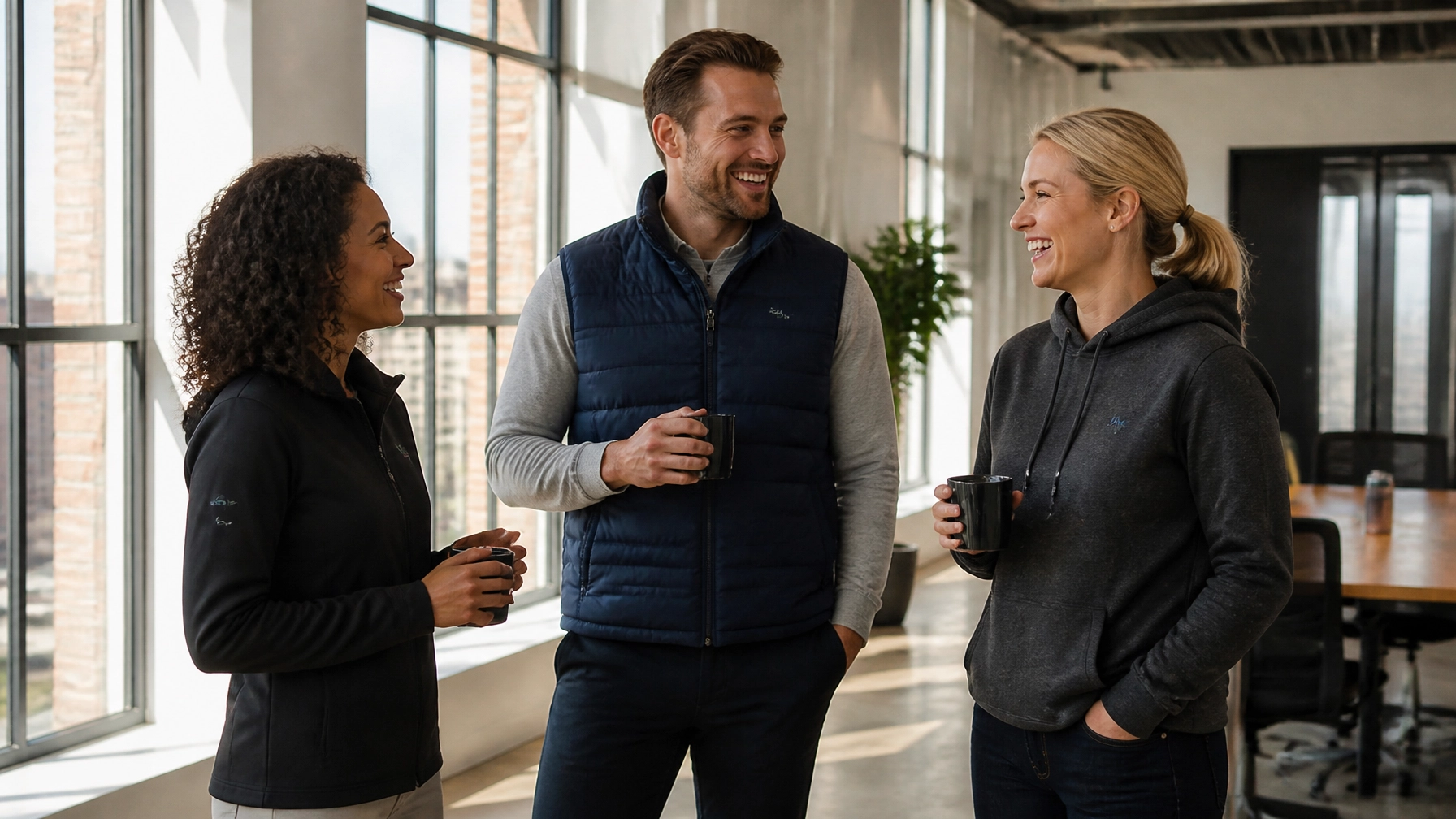
Picture this: You’re at a high-stakes networking mixer. You’ve got your pitch polished, your breath is minty fresh, and you’re wearing that one "free" corporate shirt you snagged at last year’s trade show. You know the one. It’s a bit boxy, the collar has a mind of its own (is it trying to fly away?), and the fabric feels like it was woven from recycled cardboard.
Across the room, your biggest competitor walks in. He’s wearing a sleek, retail-quality navy quarter-zip. The logo is subtle, almost tone-on-tone, and the fit is impeccable. He looks like he just stepped off a private jet or, at the very least, out of a high-end boutique.
Before a single word is exchanged, a verdict has been reached in the minds of everyone in that room. You look like a budget line item. He looks like a partner.
Welcome to the high-stakes world of branded apparel, where the difference between a "cheap blank" and a "retail-quality" garment isn't just a few dollars in unit cost, it’s the entire perception of your brand’s value. (Spoiler alert: your brand deserves better than a scratchy cotton tee.)
The "Quiet Quality" Revolution (Or, Why Your Logo Doesn't Need to Be Visible from Space)
We are currently living through the era of "Quiet Quality." You might have heard it called "Quiet Luxury" or "Old Money Aesthetic" on social media, but in the world of brand management, it’s the most important trend you can’t afford to ignore.
The days of slapping a giant, neon-orange logo across a $3 heavy-cotton shirt are, thankfully, behind us. (Unless you're running a 5K for a local car wash, in which case, carry on.) Modern professionals, the kind you’re trying to impress, want pieces they can actually wear to the office, the golf course, or a Sunday brunch without looking like a walking billboard.
Quiet quality is about the feel. It’s about the weight of the fabric, the precision of the stitching, and the "halo effect" that comes when you align your company with brands people already love. When you put your logo on a Nike, Travis Mathew, or Patagonia piece, you aren't just buying a shirt; you’re borrowing their decades of brand equity.
Simple. Genius. Impact.
The Anatomy of a "Bacon Neck": Why Cheap Blanks Are a Branding Disaster
Let’s get real for a second. We’ve all seen the "Bacon Neck." It’s that tragic, wavy, stretched-out collar that happens to cheap t-shirts after exactly three washes. It’s the international symbol of "we went with the lowest bidder."
The "Cheap Blank" Checklist of Doom:
- The Fit: Boxy, square, and seemingly designed for people with three arms and no torso.
- The Fabric: Coarse, pilled, and about as breathable as a plastic bag.
- The Longevity: 40 to 60 washes before it becomes a rag for the garage. (And that’s being generous.)
- The Vibe: Disposable.
When you hand out a cheap blank, you are essentially telling the recipient, "I value your presence exactly $4.50 worth." It’s a transaction, not a relationship. Most of these items end up in the "back of the drawer" abyss, or worse, the local thrift store donation bin.
If your goal is brand awareness, how does a shirt tucked behind a 1998 "Fun Run" tee help you? It doesn't.

The Retail Heavyweights: The Power of the "Brand Halo"
Now, let’s talk about the heavy hitters. When you step up to retail-quality apparel, you’re playing a different game. Brands like Nike, Travis Mathew, and Patagonia have spent billions (with a 'B') making people feel a certain way about their products.
1. Nike: The Performance Powerhouse
Nike means movement. It means "Just Do It." When you give a Nike performance polo to your sales team, you’re subconsciously aligning your company with peak performance and athletic excellence. Plus, their Dri-FIT technology actually works. No one likes pit stains during a keynote presentation. (Trust us on this one.)
2. Travis Mathew: The Modern Lifestyle King
If you want to own the "Work-to-Weekend" space, Travis Mathew is your best friend. It’s the unofficial uniform of the modern executive who likes to hit the links at 3 PM on a Friday. The fabrics are incredibly soft, the cuts are modern (not "skinny," but tailored), and the aesthetic screams "I’ve got my life together."
3. Patagonia: The Sustainability Flex
Putting your logo on a Patagonia Better Sweater isn't just a fashion choice; it’s a values statement. It says your brand cares about the planet, quality, and longevity. Patagonia is notoriously picky about who they partner with, so having your logo on their gear is an instant status symbol in the corporate world.
The Math of Longevity: Why "Cheap" is Actually Expensive
"But Greg," you might be saying, "a Nike polo costs three times as much as a generic one!"
True. But let’s look at the math, because the real kicker isn't the unit cost, it’s the Cost Per Wear.
- The Cheap Blank: You buy it for $8. It’s scratchy and fits weird. The recipient wears it 4 times before the collar "bacons" and the logo cracks. Cost per wear: $2.00.
- The Premium Retail Piece: You buy it for $45. It’s a Travis Mathew polo that fits like a dream. The recipient wears it every other week for three years (roughly 75 wears). Cost per wear: $0.60.
Which one is the better investment for your marketing budget? The premium piece gives you more impressions, better sentiment, and stays in the wild significantly longer. Banish the "unit cost" mentality. Embrace the "investment" mindset.

Perception is Reality: What Your Apparel Says About Your Culture
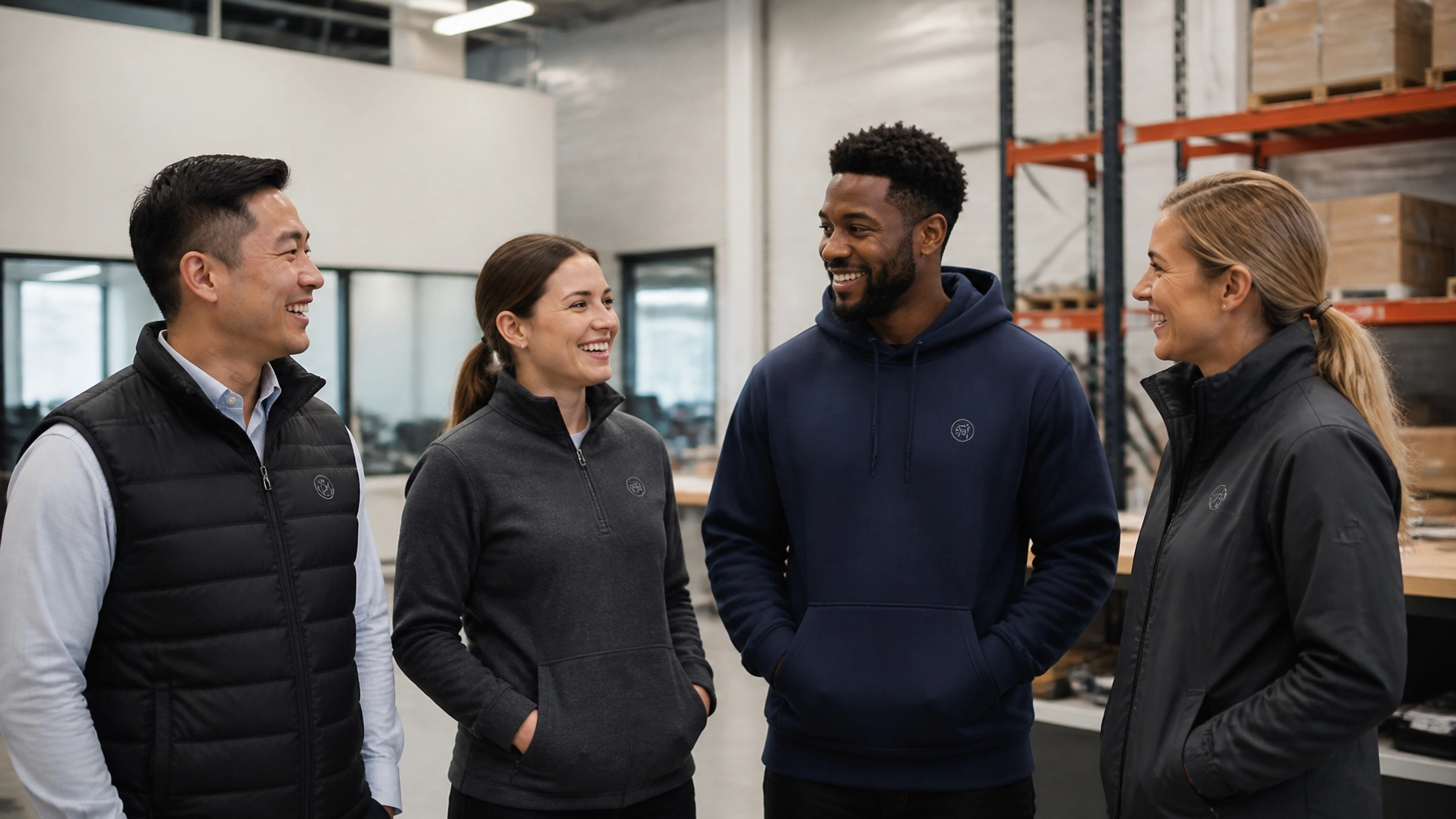
Your employees are your biggest brand ambassadors. If you ask them to wear a stiff, uncomfortable uniform, they’ll do it because they have to, but they won't feel proud doing it.
When you provide retail-quality apparel, you’re telling your team: "You are elite. You deserve the best." It’s a massive internal morale booster. We’ve seen companies transition from generic blanks to premium brands and see a direct correlation in how often employees post photos of themselves in "company gear" on LinkedIn.
You can’t buy that kind of organic social proof, but you can buy the shirts that trigger it.
The Sustainability Factor: Fighting the "Fast Fashion" Promo Trap
Let's get serious for a moment (but only for a moment, I promise). The promotional products industry has a waste problem. Millions of tons of cheap, poorly made garments end up in landfills every year because they weren't made to last.
Choosing retail-quality items is a vote for sustainability. High-quality garments are designed to be worn for years, not weeks. By choosing a Patagonia fleece or a high-end Recognition Program gift, you are reducing waste and proving that your brand values quality over quantity.
Being green has never looked so good.

The Masterclass Strategy: How to Tier Your Apparel
You don’t have to give a $150 jacket to everyone who walks by your booth. (That’s a one-way ticket to a very awkward conversation with your CFO.) The trick is Tiering.
Tier 1: The "Inner Circle" (Top Clients & Executives)
- The Gear: Patagonia, Travis Mathew, Peter Millar, or high-end Nike outerwear.
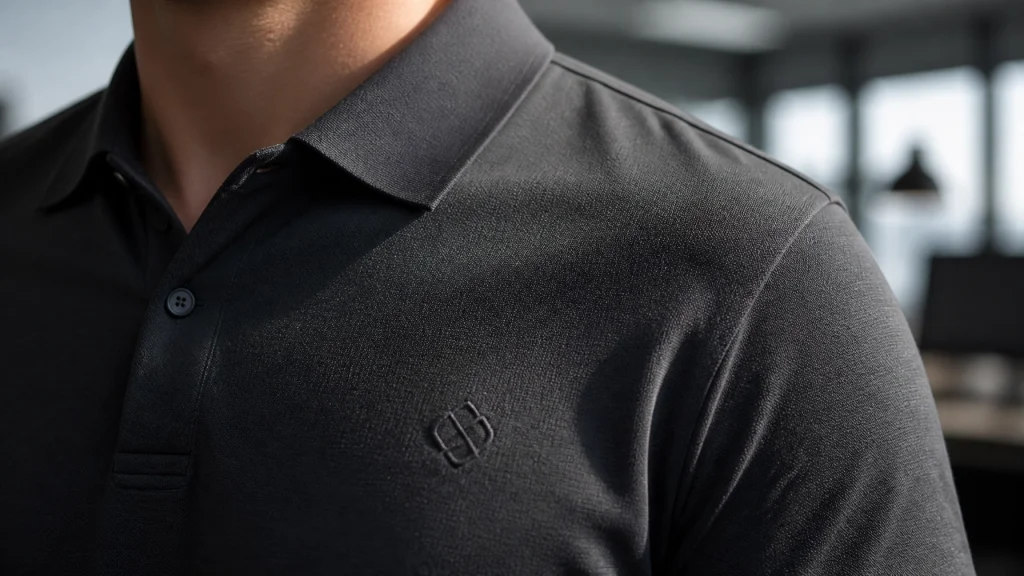
- The Branding: Ultra-subtle. Think tone-on-tone embroidery on the sleeve or back yoke.
- The Goal: A "thank you" that feels like a genuine gift, not a bribe.
Tier 2: The "A-Team" (Core Employees & VIP Prospects)
- The Gear: Premium blanks (brands like Bella+Canvas, Next Level, or high-end Nike polos).
- The Branding: Clean, modern, and centered on the chest or sleeve.
- The Goal: Daily-wear items that make them look like a cohesive, professional unit.
Tier 3: The "Mass Reach" (Trade Shows & Events)
- The Gear: Mid-range blanks that still offer a modern fit. Avoid the "value" tier at all costs.
- The Branding: More visible, but still designed with an eye for "retail" aesthetic.
- The Goal: To be the one shirt they keep from the entire conference.
Leverage the Experts: Making it Easy
Choosing between 50 different types of navy blue polos can feel like a special kind of torture. That’s where we come in. At Proforma Awards Print & Promotions, we act as an extension of your team. We don’t just "order shirts." We curate collections.
From setting up Online Company Stores so your employees can pick their own sizes (goodbye, sizing spreadsheets!) to handling the Kitting & Fulfillment for your next national sales meeting, we make the complex tasks easy.
Ditch the "good enough" blanks. Dive into the world of retail quality. Your brand: and your employees' wardrobes: will thank you.

The Final Word
In the end, your branded apparel is a handshake. It’s the first impression you make before you even open your mouth. It can say, "We’re a budget-conscious, fly-by-night operation," or it can say, "We are a premium partner committed to excellence."
The choice is yours. (But we highly recommend the one that doesn't involve "Bacon Neck.")
Ready to elevate your brand's look? Let's chat about your next apparel project. Whether it's Nike, Travis Mathew, or a premium blank that feels like a cloud, we've got the connections to make it happen.
Simple. Genius. Impact. That’s the Proforma way.